Showing posts with label Words of Mike. Show all posts

Friday, August 8, 2014

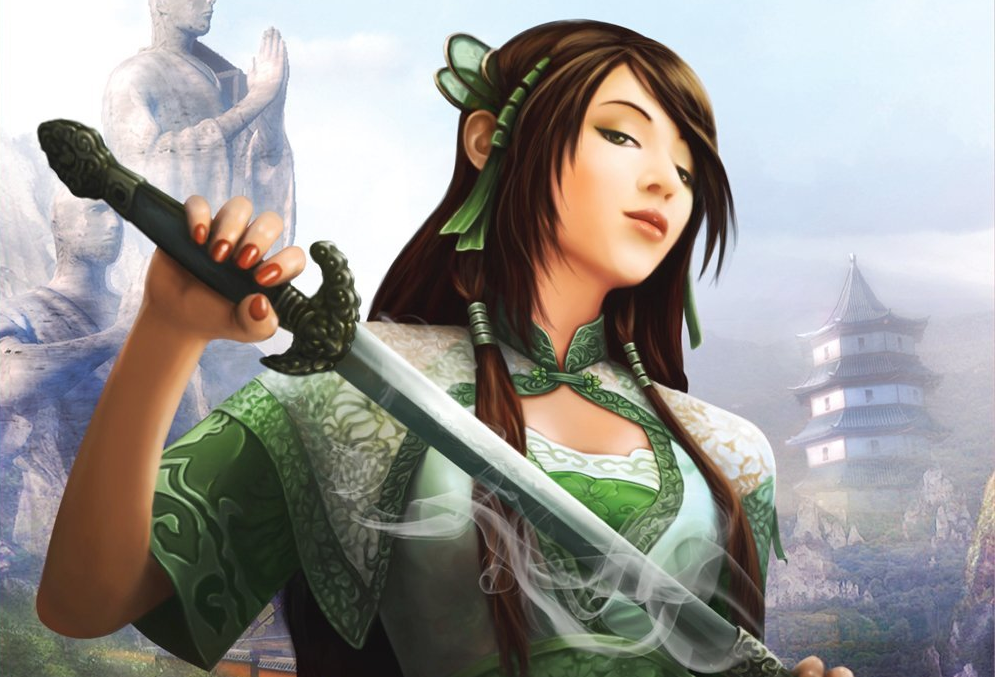
Review: Jadetech - Green Jade (Jadepunk, Fate Core System)

Authors: Jacob Possin, with flash fiction by Benjamin Feehan
Cover Artist: Nicole Cardiff and Jesse Ferguson
Format: 16 page, bookmarked PDF (14.4 MB)
Site: http://www.rerollstore.com/collections/jadepunk/products/jadetech-green-jade-pdf 

***
Overview

Mike - Before talking about the first Jadepunk supplement, Jadetech: Green Jade, let's talk a bit about MERPS (Middle-Earth Roleplaying System by ICE, Circa 1984-1999).

Reagan - Wait, what?

Bear with me a moment: there is a point to all of this.

MERPS is a wonder of 1980's RPG design: although a 'rules light' version of the ultra-crunchy Rolemaster engine, it is still ultra-crunchy beyond all comprehension compared to most modern systems.

This crunchiness extends to all aspects of the game: where Tolkien provided only a few lines of flavorful text, MERPS provides pages upon pages of detailed information, maps, character traits, stats, and tables. It takes the broad brush-strokes provided by the original creator's hand and fills in the fine details: ample fodder for the detail-oriented GM to set the scene in any possible scenario of a Middle-Earth based game.

So what does this have to do with the Jadetech: Green Jade supplement?

Well, herein we find the opposite approach employed; as in the main book, this expansion paints with a broad brush. It is about showing, not telling; it provides stories and flavorful examples.

This is a key point to talk, not just about this supplement, but the Jadepunk line in general. The majority of RPG products seem to follow the model of presenting the game rules and interspersing narrative and setting details in the sidebars and example text. Crunch over Fluff, if you will. The Jadepunk setting is well-written, full of flavor, and its obvious that a lot of time has been spent imagining what the society around this jade technology looks like.

Green Jade is the same in this respect, and I think its the right approach for the setting. Much of the mechanics are relegated to sidebars, to accentuate the narrative text. What text is devoted to mechanics reads as much as a suggestion on how to use it in a broad sense as opposed to actual mechanics, and I like it! Not only does it provide more space to reveal why the Jadepunk universe is the Jadepunk universe, but it allows GMs the option to mechanically flavor how green jade is both used and influences the game world however that GM likes. Bob's your uncle!

It shows some fine examples of green-jade gear (using the Assets build system found in the main book), it tells stories of the use of green jade in the game-world. No maps. No tables. No stats, apart from a few sample Assets. Instead, it paints a picture, and presents these pictures as fresh inspiration for your own campaign.

And it doesn't provide much in the way of new mechanics: the only mechanical addendum is the replacement of the 'secret' aspect with the 'instinct' aspect for creature NPC's. This is more of a tweak than a truly new mechanic. In conjunction with this idea, the book presents the idea of 'chaermera': animals enhanced in toughness and/also size by exposure to green jade.

Chaermeras are great - yet another example of how jade influences the overall gameworld. Given that Jadepunk was conceptualized originally as 'What if we mashed up old we-st gunslingers with wuxia heroes?' - you can see just how much the authors explored jade's societal impact.

With it's small size (16 pages total, including the back/front cover & credits page) and low price-point ($2.99 USD for the PDF at DriveThru RPG), Jadetech: Green Jade reminds me of the Gadget Guide and Power Profile PDF's for Mutants and Masterminds 3e

Like these guides, it is available as a low-price point PDF; and also like these supplements, it presents little - if anything - in the way of new rules; instead, it shows you how to use these rules to build new and wonderful things for your own game. Considering publisher +Ryan M. Danks publicly confessed love of Mutants & Masterminds, I can only assume that these parallels are the result of inspiration/emulation rather than coincidence.

You get a lot for $2.99!
Buy or Don't Buy?

Like Jadepunk itself, this supplement provides a beautiful and easy-to-read presentation. Also like the main book, it gives all the flavor you need about the subject at hand while providing plenty of whitespace to make it all your own.

But is it worth your hard-earned gaming dollars?

Well.... at US$2.99 for the PDF, it's basically an impulse buy. So I would think that price-point is hardly an obstacle for most. On the other hand, most of the beauty that the book presents will live on your computer/tablet screen only, unless you have the option of making a HQ printout.

  • Buy if: You love Jadepunk, and would like most examples of the setting and it's flavor for your table. Plus, it presents some great sample assets to use in play, or to inspire some of your own creations.
  • Don't buy: If you are using Jadepunk rules to run a generic campaign, there isn't much here for you. The chaemera rules might be of use to you for building beast-type NPC's, but I basically already spoiled that already in this review. On the other hand.... it's $2.99. You might want to download it anyhow for the read alone.

Final Word

Although this is a wonderful supplement- kudos to +Jacob Possin & +Benjamin Feehan for your lovely work here - this really isn't the Jadepunk supplement that I truly want.

I want mountains, Gandalf- mountains! I wish to know more about the larger world sketched in broad detail in the main Jadepunk book. Tell me more about the Cairn Mountains of Aerum; inform me about the Funarino Channel of Kaiyu. I'd love more on the history and conflicts between the major mining companies. Tell me about the honored traditions of the Nottila ship-captains! Show me how to run a game set in the fronteir-era of Kausao City, when the different powers jockeyed to see who would control the black jade of the Xibu Bati mountains. The Aerum Empire has airships!

I know that there are adventures to be had in Far Harad: tell me what I might find there. I want to know all that you can tell me.

But I have every faith that all of this - and more- will be explored in further supplements. And I cannot wait to see what Reroll Productions has in store for me going forward.

****
Jadetech: Green Jade (Reroll Store)


Wednesday, July 9, 2014

Character Highlight: Lotus-Blossom Mei (Tianxia)

Following my recent review of the wuxia RPG Tianxia, I thought it might be fun to post of some the builds made for our game here in Seattle.

First up: courtesan and Jinyiwei Imperial agent, Lotus Blossom Mei:


"Lotus Blossom" Mei

  • Aspects
High Concept: Imperial Secret-Agent and Courtesan
Trouble: The heart must be held in secrecy
Other: Master Ling taught me everything; Beautiful viper; Trust no one
  • Skills
+4 Deceive
+3 Fight, Rapport
+2 Athletics, Chi*, Empathy
+1 Burglary, Investigate, Notice, Will
  • Jianghu Rank: 1* (Ghost Serpent Form)
Ghost Haunts the Shadow: You may use Chi instead of Stealth to create an advantage based on moving silently or remaining unseen.
Serpent Bites the Hand: If you gain shifts on a defense, you can sacrifice your action next turn to immediately inflict an attack on your opponent using the shift value of your defense as your attack result.
Serpent Strikes Twice: +2 bonus to Deceive rolls to create an advantage based on disorientation, distraction, or unbalancing against opponents you have already inflicted stress on this combat.
  • Stunts
The Scent of Jasmine: +2 to Overcome with Deceive when dealing with those who might find you attractive.
Resplendent Flower: Sub Rapport for Lore when dealing with matters pertaining to fashion and beauty.
A Hundred Flowers: Once per session you can call upon a helpful ally in the area, provided you can recount a story of your previous meeting.
  • Refresh: 2
  • Physical Stress: OO
  • Mental Stress: OOO
Consequences:
  • Minor (2):
  • Moderate (4):
  • Severe (6):
Special Ability Bonuses:
  • +1 Zone Movement, +1 Passive Opposition (Jianghu Rank 1)
  • Chi Armor (Chi +2, see Tianxia pg. 60)
Background:

Orphaned at a young age, Mei was taken in by Captain Ling of the Jinyiwei (Brocade-Clad Guard). Although Master Ling was like a father to her, he did not take her off the streets out of sheer charity: instead he aimed to train her as a secret member of Jinyiwei, who served as the Emperor’s feared secret police force.

Under a series of tutors Mei learned to read and write, sing and dance, and various other arts appropriate for a charming lady of high-society during the day: while at night Master Ling himself taught her the techniques of the Ghost Serpent school of martial arts.

At age 18 she was told to report to Madame Qi: trainer of Courtesans and herself a secret member of the Jinyiwei. Under Madame Qi’s watchful eye she learned to manipulate the hearts of men and those prey to easy flattery, while never forgetting the most important lesson taught her by Master Ling:

“Your heart is your greatest treasure: keep it secret, and never let anyone steal it.”

As a member of the Jinyiwei, Mei travels the remotest corners of the Emperor’s dominion, seeking to gather intelligence and bring to justice both criminals and corrupt officials alike, all whilst under the guise of ‘Lotus Blossom’ Mei : famed and much sought-after courtesan.

***

Although the Emperor has many judges and magistrates in his service, members of the Jinyiwei typically make very little use of them, having been authorized by the Emperor himself to bring any in all to justice without due-process or trial as they see fit.

Mei enjoys the full authority of any Jinyiwei member: when dealing with highly placed or influential individuals who could feasibly escape prosecution it is not unusual for her to serve both as judge and executioner when other means are not available.

***
"Lotus Blossom" Mei (Google Docs)

Tuesday, July 8, 2014

Review: Tianxia (Fate Core)

Format: Hardbound Book/PDF: 192 Pages
Publisher: James Dawsey
Author: Jack Norris
Art: Denise Jones
Map: Marco Morte
Editing: Nathan Kahler
Art Direction and Graphic Design: Daniel Solis, with Ruben Byrd
***

Launched via a successful Kickstarter campaign in October of last year (it seems like this is how you launch RPG's nowadays...), Tianxia is a wuxia setting and rules supplement for Fate Core.

Although I was instantly enticed by the style and presentation presented in the Kickstarter - the art especially, as the art is gorgeous..more on that below - I dawdled on contributing until November, and didn't really examine the PDF at length until about a month ago.

My thoughts in brief: if you already own Fate Core and you want to play a high-octane wuxia game, you owe it to yourself to at least check it out. If you are new to Fate and just want to play a wuxia game that supports all the tropes, then you should still check it out.

More details as to the why of this in my review below.

  • Presentation & Layout

My thoughts on Tianxia very much parallel what I had to say about Jadepunk in my review of that game earlier this year: this is a beautiful and beautifully laid-out book where the design really sells the genre and flavor of the game on every page.

This is also one of the blessed few RPG books where the reader is rewarded by reading it cover-to-cover, like a storybook: and indeed, we are given the story and flavor of the world of Tianxia well before the author presents the hard mechanics that make things work in play. 
  • Setting and Background
An except from the book sells the basic idea well:
"Tianxia (“under heaven”) is a series of rules and setting supplements for the Fate Core system. 
The title of the game comes from both the concept of all the lands and people in Imperial China existing under the purview of the gods and their celestial kingdom and the term used for the imperial unification of kingdoms and cultures to create a central “China” that had previously not existed. The films Hero (Jet Li, not Dustin Hoffman) and The Emperor and the Assassin present fictionalized but highly entertaining versions of how that unification began.  
Just as Tianxia the concept was supposed to include everything that existed “under heaven” in real world imperial China, Tianxia the game includes everything in our rules and setting materials heavily inspired by Chinese myth, legend, and modern media such as Kung Fu and wuxia literature and film."
What follows is a pastiche of what is the 'standard' setting for a traditional wuxia adventure: Jaingzhou, the wild west of this fictional version of China. The book explains that this is but one of the nine-provinces of Shenzhou (which itself is but another name for China), the other eight being promised in greater detail in later supplements.

Far from the grip of the capital, rule of law in Jaingzhou province is more of the 9/10th of the law variety: if you can hold it or steal it, it's yours. This is a place full of bandits, secret societies, corrupt officials, private security services: a land of corruption and injustice. A place badly in need of heroes.

In short: the perfect place to have adventures!

Everything you need to run a full campaign is here: loads of named NPC's, locations, and organizations to power your game: but enough white space to make it all your own.

Where the flavor text and character stats end, various sidebars inform the philosophy of the game designers, discussing matters like creating an inclusive gaming environment, possible adventure hooks and story ideas, and even the traditional role of eunuchs in Chinese culture and legend. All dandy here.
  • Rules & The Deadly Arts of Kung Fu
Although Fate is often presented as a 'story game', Fate Core in particular has a lot of bits to define character competency via Skills and Stunts. Tianxia expands upon this by adding a new Skill, 'chi', and a new way to build martial arts abilities via the Forms system.

An important note here: although it does contain 192 pages of wuxia goodness, Tianxia is NOT a complete game system. You very much need Fate Core to play it and build complete characters: even the action resolution tables are missing from the book.

As stated in the intro, I participated in the Kickstarter and was already playing Fate Core when I picked this up, so this wasn't an issue for me. But this basic point is not mentioned in either the front or back covers, and appears for the first time under 'What Is This Book' at pg.16. I can easily see a new gamer overlooking this factor, even upon relatively close inspection.

So if I picked up this book after flipping through it at the FLGS and discovered this when I got back home and not already in possession of Fate Core..I could imagine being a tad upset. Maybe a niggling point since Fate Core is currently a 'pay-what-you-like' (including nothing) PDF download, but it's my one complaint about the physical book.

But let's talk about the good stuff!

In addition to the 18 Skills presented by Fate Core, Tianxia presents a new one: Chi, the quasi-mystical force that represents the body's flow of energy. The actual concept of chi (or 'ki', or 'qi') is complex and tied to Chinese Daoist thought...but here it's a kind of super-power that gives characters greater physical/mental endurance and recovery abilities, as well as expanding what the character can do in conjunction with their Forms and Stunts.

Forms are really neat. For those already familiar with Fate but not Tianxia in particular, it's best to think of Forms as specialized (and discounted) Stunt packages.

For example: the character Smiling Ox (character sheet below), is trained in the Iron Tiger Form. Per the book:
"The dreaded Iron Tiger practitioner is thought to be one of the most aggressive, lethal fighters around. 
What Iron Tigers lack in maneuverability and flexibility they make up for in physical power, toughness, and aggression. This style eschews many of the tactics and principles of softer styles to focus purely on hard-hitting blows, disabling strikes, painful locks, and linear but effective defenses."
Each form is also an aspect that can be invoked/compelled like any other aspect in Fate. Taking a form has cost involved, in terms of Refresh (your starting Fate Points): one point of Refresh (or Stunt slot) gives you the form and one Technique (worded as pre-generated Stunt). Each additional point of Refresh spent on the Form grants two more techniques.

Like the Iron Tiger Form above, all Forms consistent of a element (Iron, Storm, Forest, etc.) and an animal (Tiger, Monkey, Dragon, etc) that flavors and informs your martial arts style.

There are additional rules that grant certain benefits when you master certain Forms, which I won't get into here. Bottom line is: although this is an optional system for character creation, I cannot imagine NOT taking a Form if you are playing game where physical conflicts are going to come into play. They are just too powerful to be ignored.
  • Sample Characters and GM'ing
The GM'ing section starts out sprightly, with a handful of sample characters emulating certain tropes (I recognize Detective Dee and Princess Mononoke as templates- I'm sure more informed readers will spot others). This leads into a sample play session starring these characters, to demonstrate how Tianxia character builds work in play. 

This then leads into the standard GM advice section, some comments on legendary weapons (standard Fate rules: if gear is important to the story, model it. If not, it's just flavor), story advice and more plot seeds, and a 'bestiary' of standard and exceptional NPC's that can be encountered in play. 

All of this is followed by four simple - but well-plotted - two page adventures to run your new characters through.

Like the rest of book, these sections are presented in informative (but not authorial, in the bad sense of the word) way, and all the material is easy and fun to read to boot.

  • Inspirations and Afterword
Much of the final 20 pages or so (about a tenth of the book!) are taken up by listing inspirations from films, books and video games. At first blush this might seem like an excessive use of limited space, but it's clear that the author (Jack Norris) wants to provide this because:
  •  It's good to know where he is coming from in terms of game-design and play
  • He wants you to have plenty of sources of inspiration for your game as well.
For my part, I've seen four of the eleven listed films, am familiar with (but have not read) two of the four listed books, and I've played two of four listed games. Personally I would have added the two Zu Warriors films to the mix, as well as Iron Monkey: but it's not my book.

Author Jack Norris' afterword is nice too, noting his personal journey to finally getting this game published after a decade plus. This has clearly been a labor of love for him, and this absolutely shows in the finished result.
  • Final Thoughts
So the book looks nice, has great content, and an interesting system to build kung-fu powers: but does it work well in play?

Well, I've recently been GM'ing a game using the system recently and I can give the affirmative to that: abso-friggin-lutely yes it runs great in play! My players have been having a fantastic time exploring their various kung-fu powers, and as GM I've had a blast coming up with scenarios to challenge them.

Now, this is still Fate - the roleplaying aspects of portraying characters at the table are still important - but thats true of any good RPG, Fate included. What Tianxia brings to the table are the extra bits, and those extra bits are fun and don't bog down gameplay at all.

Is it worth your gaming dollars? Well....that depends. It's a nice coffee-table book - the art and presentation are great, as noted above - but at $44.95 (USD) it's pretty steep investment for a book that won't ever be played. And this is a game that wants to be played.

If you are already gaming with Fate Core and have been thinking about playing a wuxia game: then yes, it's worth the investment. If you prefer playing from PDF's (or just don't want to pony up for the hardback), then that's just $14.99 on DriveThruRPG. 

If you aren't familiar with Fate Core but think playing a high-octane (but still story-driven) wuxia game might be fun, I would suggest you download and read Fate Core first (available as pay-what-you-like/free price-point), before investing in either the PDF or the hardback for Tianxia. Tianxia takes what Fate Core offers and builds on it: if you don't like or grok Core, you will have the same trouble with Tianxia.

***

More on the blog soon about our Tianxia game here in Seattle: The Kingdom of Xinjou!

***

Wednesday, July 2, 2014

I Kissed a Pathfinder..and I Liked It (Pathfinder)


If you have been following this blog - and if you have, thank you! - you will be no stranger to my personal ambivalence towards d20 based games.

Why ambivalent? Well, like most of my generation, I started in this hobby by playing D&D; the original d20 game, back before d20 became a thing-unto-itself. So for me, d20 is the baseline by which all other games evolved outwards from. I can't really hate d20; d20 is my roots, after all. And within it are the basic building blocks for the hobby itself.

But...I've moved on, right? I have other, more advanced - more modern - game systems to play. Fate! Dungeon World! If I want a crunchy d20 game to play, I can spy Fantasy Craft right there on my shelf, waiting to be explored.

Plus, I've played a D&D 3.5 game, and I found the whole experience utterly lamentable. The basic problem was we had GM who was utterly committed to playing the game RAW with no exceptions: but really, if any game played RAW is a dull game, then it's just a bad game system. Right?

Right.

But...well, then there's Pathfinder. The sexier younger sister to D&D 3.5, with the beautiful art and presentation, with the legendarily well-written and flavorful modules ('Adventure Paths'), play-tested and fan-supported, all wrapped up in a cute little bow by local Seattle-area gaming studio Paizo.

Pathfinder always intrigued me. But not enough to play the damned thing. I flipped through the main book, and the modules, and the innumerable splat books with interest and appreciation..and then put them back on the shelf of my FLGS. Great stuff guys...but no thanks.

Flashback to 2012: looking for some gaming aids for my ongoing Fantasy Craft campaign, I stumbled across the Pathfinder Beginner Box. Complete with a playmat, some artful 'pawns' (cardboard miniatures), and set of dice, for just under $30.00? Sure..why not!?


And my gaming group used the hell out these tools: the dice rounded out my polyhedral collection well, and the map and pawns got plenty of use in our Fantasy Craft campaign. As for the rest - the character sheets and pregens, the Game Master Guide and Heroes Handbook- these stayed in the box as curiosity. Flipped through, but unread and unused.

Flash-forward to 2014. It's 8am on Saturday morning, and I'm packing up my stuff for Go-Play NW 2014. Gary has a supers game set for the day...but I've got nothing at all prepped to run. My eye spies the Pathfinder Beginner Box, and I think: sure, why not? If we have a spare moment during the day, I can run this. Easy-peasy.

Long story short: such a spare moment appeared, and I wound up running a game using the Black Fang's Dungeon scenario from the book. The result? I loved running it, and my group had a great time enjoying an old-school dungeon-crawl.

Before we go any further, note that I made some minor rules modifications before we even got started:

  • I failed to bring the playmat and minis, so movement and range were made to be largely narrative: Close (melee range), Near (penalty-free ranged attacks) and Far (ranged attacks at -2). Characters were allowed to move one 'zone' for free, or two by giving up an action.
  • Skill use was based on narrative justification: if you could justify the use of the skill, it was valid. If the book said 'Knowledge: Religion' was needed for the check, then 'Knowledge: Arcana' could sub as well.
  • Penalties for firing into melee combat? Attacks of opportunity? All narrative: the GM says when this stuff matters. If it slows things down or makes the experience suck..it doesn't matter.
  • You had to narrate what you were doing to do it. Attacking a goblin? Tell me how you are doing it! You succeed and kill a goblin? Narrate that shit: I want some cinematic flavor at my table, or it's all just boring numbers.

In short, I was running the game using Pathfinder mechanics to modify rolls, but acting like I was GM'ing a game of Dungeon World. And it worked like a dream, and fun was had by all.

What's the take-away from this experience?

For me, it's that any game system can be fun, provided that everyone - players and GM included - are committed to having fun. The minute that any rule gets in the way of that, that rule should immediately be abolished or ignored. 

Secondarily - but just as important - don't ever think of the players as agents that derail your story. They are there to contribute to the story. The players will do things not imagined by you or the module's designers: in this case, improvise!  

In the case of this module the scenario suggested either a resolution as a physical conflict or a diplomatic one: in reality, it was both with the players slaying King Fatmouth and interrogating a charmed goblin;  I chose as GM to provide the 'diplomatic solution' info via the charmed goblin, as this seemed the logical reward to this cautious approach. The story was thus adjusted based on player initiative, rather than being derailed altogether. 

So will I be running more Pathfinder games in the future? 

Sadly, the answer to this seems to be 'no'. My gaming group prefers the flavor found in newer - and more narrative, and flexible - game systems like Fate: as soon as I suggested we play Pathfinder ongoing the conversation led to talk of Fate Freeport being used for fantasy gaming. Which is great: I loves me some Fate gaming.

So for now, Pathfinder will have to live in inside of it's little Beginners Box, unloved and hardly played. But we did have a moment, once.

And I liked it. 

***

Monday, June 23, 2014

Character Highlight: Akifumi Oh (Cyber Jadepunk)


As mentioned in Reagan Taplin's post last week, we are gearing up soon to play a Jadepunk game via Google Hangouts, with the first session scheduled for July.

Rather than using the world as presented, our future Jadepunk game (dubbed 'Cyber Jadepunk') will explore the world of Kausao City almost a century forward in time from the setting presented in the book: where jadetech has progressed well beyond the steampunky into something resembling cyber-technology. 

With this idea in mind - and to provide an example- let's look at crusading reporter turned super-hacker, Akifumi Oh:


Akifumi Oh
Aspects
  • Portrayal: Crusading reporter turned vengeful hacker
  • Background: I gave up a life of luxury to pursue justice
  • Inciting Incident: Virtually imprisoned for twelve long years
  • Belief: I will taste all that life has to offer before I’m done
  • Trouble: Beneath the snow-capped mountain, an unquenchable fire
Professions
  • +3  Scholar
  • +2  Engineer, Fighter
  • +1  Explorer, Scoundrel
  • +0  Aristocrat
Assets

Black-Jade Implant
  • Type: Device
  • Function Aspect: Black jade subdermal implant
  • Features: Exceptional (Use your Professions to interact with jade); Focus 2 (+2 Scholar)
  • Flaws: Situational 2 (When interacting with networked devices only), Troubling (Aspect: The channel goes both ways...)
  • Cost: 1
Virtua-Fighter
  • Type: Technique
  • Guiding Aspect: Virtually imprisoned for twelve long years
  • Features: Focus (+1 Fighter); Harmful 1 (+1 Shift)
  • Flaws: Limited (Melee attacks only)
  • Cost: 1
Old-Boy Network
  • Type: Ally
  • Function Aspect: The old-timers still remember me
  • Features: Professional 2 (+1 Scholar, +2 Scoundrel); Aspect (Well-Informed)
  • Flaws: Limited (Once per-scene)
  • Cost: 1
Secret Bank Accounts
  • Type: Technique
  • Guiding Aspect: I gave up a life of luxury to pursue justice
  • Features: Flexible (sub Scholar for Aristocrat)
  • Flaws: Situational (Only when your purchasing power matters)
  • Cost: 1
  • Refresh: 3
  • Stress: OOO
Consequences:
  • Mild (2):
  • Moderate (4):
  • Severe (6):
Backstory:
Although born from an immigrant family, Akifumi Oh enjoyed a life of privilege: the best schools, the best opportunities, the best connections. A new white-jade powered roadster at age 16; and plenty of beautiful and well-connected friends. 

But during his schooldays young Akifumi saw a glimpse of how the other-half lived in Kausao City; and the spark of niggling doubt grew into the flame of righteous indignation. 

Upon completing his schooling he passed up other more lucrative opportunities to become of crusading reporter for the Kausao Times; covering the underbelly of lies and corruption that was the foundation of the city’s unequally distributed riches. 

By age 30 he was as famous as he was infamous; welcome at many a party, bar and bedroom door throughout the city. All of this changed one night: stumbling drunkenly home looking for late-night auto-rickshaw, he was abducted by unknown parties and immersed into saline bath, where he was locked into a virtual reality prison..for twelve long years.

Having eventually freed himself by learning how to communicate with and manipulate networked jadetech, Akifumi has sworn revenge upon the unknown parties that once made him their prisoner. And he is willing to use any tool at his disposal - including the permanent black-jade implant he gained when he was abducted - to achieve this goal, whatever the consequences might be for himself or others.

***


Thursday, June 19, 2014

Character Highlight: Kasumi Tenaga (Jadepunk)


Hello again, everyone!

As a follow-up to my recent review of Jadepunk, we will be posting up some character builds using the system. First up is Lady Kasumi Tenaga, exiled noblewoman with a demon-blade.

Like all Jadepunk characters she is made up of Aspects, Professions and Assets. Kasumi spends most of her available Fate-Point Refresh on Assets: in this case her various dragon-school Techniques, a Device in the form of her fearsome demon-blade, and an Ally in the form of her loyal retainer, Toshiro Makabe.
---------------

Kasumi Tenaga
Rebellion_Wojtek Fus.jpg
Aspects
  • Portrayal: Last scion of Clan Tenaga (Kaiyu)
  • Background: Trained in the arts of the Onaga Sword School
  • Inciting Incident: Lord Asano destroyed my family
  • Belief: I must restore my family’s fortune and honor
  • Trouble: I don’t know if I am worthy
Professions
  • +3 Explorer
  • +2 Aristocrat, Fighter
  • +1  Scholar, Scoundrel
  • +0 Engineer
Assets

Dragon Takes Flight
  • Type: Technique
  • Guiding Aspect: Trained in the arts of the Onaga Sword School
  • Features: Focus 2 (Explorer +2)
  • Flaws: Situational (Only when overcoming obstacles through movement)
  • Cost: 1
Dragon Strikes True
  • Type: Technique
  • Guiding Aspect: Trained in the arts of the Onaga Sword School
  • Features: Focus 2 (Fighter +2)
  • Flaws: Situational (Only when attacking in a duel)
  • Cost: 1
Dragon Moves With Grace
  • Type: Technique
  • Guiding Aspect: Last scion of Clan Tenaga
  • Features: Focus 2 (Aristocrat +2)
  • Flaws: Situational (Only when you attempt to impress in high society)
  • Cost: 1
Ancestral sword, “Ao Oni no Tsurugi”
  • Type: Device
  • Function Aspect: Demon-blade crafted from green jade
  • Features: Harmful 2, Exceptional (Deadly sharp; a defender cannot mark a stress box when hit)
  • Flaws: Troubling (Aspect: The sword demands that I fight!), Situational + Limited (Exceptional feature is only applied if you succeed with style, once per scene)
  • Cost: 1
Toshiro Makabe
  • Type: Ally
  • Function Aspect: Loyal retainer of Clan Tenaga
  • Features: Professional 3 (+2 Fighter, +1 Engineer, Explorer, Scholar), Sturdy, Independent
  • Flaws: Troubling (Aspect: Legendarily stubborn and contrary)
  • Cost: 2
Refresh: 1
Stress: OOO
Consequences:
  • Mild (2):
  • Moderate (4):
  • Severe (6):
Background/Personality:

Born into a life of comfort and privilege, Kusumi’s life was shattered when her family was framed as plotting against the government by the conniving Lord Jubei Asano.

Armed with her family’s ancestral sword and accompanied by her loyal retainer Toshiro Makabe, Kusumi has come to Kausao City - where Lord Asano is now an influential council member - to expose his misdeeds and restore the good name of her family.
***
Kusumi is armed with the Green (Jade) Demon Sword, Ao Oni no Tsurugi. Legend states that the crafter of the sword had a heart filled with turmoil and violent passions: and indeed, she finds that whenever she draws the sword she is compelled by a powerful urge to fight. But the demon-blade also lends her it’s strength: a strength that she believes necessary to stand any chance of achieving her goals.

----------------------------
Kasumi Tenaga (Google Docs)

*Note: Edited to reflect correct costs for Assets. Thanks to Ron Frazier on G+ for the assist.

Wednesday, June 18, 2014

Review: Jadepunk (Fate Core System)


Jadepunk: Tales From Kausao City
Authors: Ryan M. Danks, Jacob Possin, and Mike Olson
Cover Artist: Conrad Javier
Format: 139 pages, softcover
ISBN: 978-0-615-98624-1
Website: http://jadepunk.com/

****
Funded by a successful Kickstarter campaign started summer of last year (2013), Jadepunk is yet another of the gaggle of Fate-based RPG's to appear since the wildly successful launch of Evil Hat's Fate Core in 2013.

All of this reminds me of the plethora of d20 based games launched with the advent of the OGL in the early 2000's, with similar results: a handful of great games launched using a basic universal system, and a lot of also-rans.

So where does Jadepunk fit into this equation? In my opinion it fits neatly into the 'great' category, for the reasons outlined below.

***
Presentation & Layout

First impressions: Jadepunk is a beautiful book. While there isn't art on every page, in all places there is a degree of artistry: from the use of genre-appropriate (but still very readable) fonts, to the ink-splashes and 'torn pages' effects that sub for the additional info boxes in Fate Core and other RPG's, the presentation throughout is slick, artistic and easy-to-read.

Where interior art does appear (provided by Nicole Cardiff, Conrad Javier, & Kurt Komoda) it ranges from good to absolutely excellent; some of which you will see scattered throughout this review. This is a book from an indie-press publisher and this is their first product: but you sure as hell cannot tell that by looking at the end result.

In fact, I think that some better established publishers should look at this book for an example of how to properly sell your game through sheer presentation. No complaints at all in this department.


Introduction + World of Jadepunk 

If you've read Fate Core, or more to the point Fate Accelerated Edition (and if not, you should: see my review) then there's not much the introduction has to offer that you haven't read before.

Much of the text explaining the system goals and intent is lifted/reworded from Fate Accelerated (FAE), which in my opinion is great choice: FAE is the tightest and most succinct presentation of Fate rules to date.

The overall philosophy of FAE reverberates throughout the entire text: present the tools you need to build your characters and world, explain how to resolve actions at the table, then get the hell out of the way so we can all get to gaming. The more RPG's that embrace this approach going forward, the better I feel about the future of our collective hobby.

What is new here is the unique setting of Jadepunk: a kind of wuxia + classic western mashup with serious steampunky overtones. From the book:
"...what would it be like if gunslingers from the Western literary genre were present in a wuxia world? Exploration of this idea found that the code of Xia (followed by many wuxia heroes) has very similar values to the code of honor many gunslingers follow. A perfect fit. Add to that an original take on the steampunk genre, with all its quirky fabulousness, and you have an original setting."
The jade in Jadepunk is integral to the setting: rather than being just the decorative stone it is in real life, in Jadepunk it is the source of magic in a world without overt magic - and also the thing that powers the world's most powerful technologies. And as a limited resource, it is also the main source of conflict in the world.

Although other regions of the world of Jadepunk are touched upon in the core book, the default setting for the game is Kausao City, which is basically a panache of early 1900's Shanghai mixed with Victorian-era Birmingham: like Shanghai, it is controlled by and split into quarters dominated by the Great Nations (a bit about them later). Like Birmingham (UK in this example, although true of the US version as well) it is also a source of a resource that powers industry: in this fantastic world this is Black Jade rather than coal.

Also akin to Shanghai in the early 20th century, this is a place of great wealth and grinding poverty: a place where the rich scheme to get richer, and keep the poor in their place...often with violence. What middle classes exist are simply treading water, hoping to get to the unassailable top while dreading falling into the bottom; from which there is no apparent escape.

And this is where the PC's come in: by default players are assumed to take the role of the Jianghu, men and women that fight against injustice, and are the protectors of the destitute and defenseless.


Character Creation: Professions and Aspects

This is Fate game after all, so character creation begins with the creation of aspects. I've discussed Fate aspects quite a bit on this blog already, so I won't get into the mechanics of them here.

What is unique to Jadepunk is how your five aspects (the same number suggested by Core) are stacked: rather than the High Concept + Trouble + Other stack presented in Fate Core, the required aspects are formalized as:
  • Portrayal
  • Background
  • Inciting Incident
  • Belief
  • Trouble
Portrayal is basically the same as a High-Concept in Fate Core: it's the one-sentence description of the character you are playing. Background is just that: where did you come from?  Following this, the Inciting Incident is what put you on your current path. Belief is your characters most deeply held conviction, and Trouble is...well, the main thing that causes you trouble. 

As in all Fate games, these aspects tie your character to the world, and the world to your character: major story elements both supporting your characters goals and presenting opposition can be presented during the character creation process. 

Before moving on to Professions, I think should address a non-apparent aspect of character options in the game: although this certainly an Asian-flavored game world, you are under no obligation to play a Pan-Asian character at your table. The world of Jadepunk is ethnically diverse, and Kausao City itself is a melting pot.

Populated -and dominated - largely by members of the Great Nations, Kausao City sees members with ancestry hailing from:
  • The Aerum Empire - A steampunk British Empire
  • Kaiyu - Tokugawa-era Japan with the serial numbers filed off
  • Naramel - The Near-East, complete with camels and minarets 
  • Tuyang - China in no particular era: but I read it as a steampunk Song Dynasty
Other nations are briefly touched upon, but so lightly that I can't really grasp their character in any detail. Hopefully these will be fleshed out with later supplements. 

On to Professions now: these replace Skills in Fate Core and are more akin to Approaches in FAE, or the six d20 inspired 'Skills' that appear in the Freeport Companion. Available Professions are limited to:
  • Aristocrat (Social/Resources)
  • Engineer (Tech/Mechanical)
  • Explorer (Athletics/Agility-based tasks)
  • Fighter (Melee + Ranged)
  • Scholar (Intellect & Education)
  • Scoundrel (All things sneaky and underhanded)
In practice, I should expect these skills to work roughly like FAE Approaches/Fate Freeport Skills, but far-less broad: there is a very clear line of demarcation between what your Engineer and Scholar abilities allow you to do, for example.

Before moving on to the next section, note that Jadepunk features the same single stress-track (used for absorbing physical and psychic 'damage'), as FAE: your Profession level has no influence on this track. You can, however, improve upon your characters ability to withstand stress via Assets, discussed below.

Assets, and the Colors of Jadetech

I've done a fair number of Fate Core/FAE builds. In fact, I'm not aware of anyone outside of - maybe! - the game's designers who have done more. I loves me some character builds, basically.

But when I first looked at Jadepunk's Assets system - which replaces both the Stunts and Extras presented in Fate Core - I really could not wrap my head around them. My first impression was that Jadepunk had taken the elegant Stunt rubric from Fate 3.0+ and replaced it with something wonky and overly mechanical. 

Having played around with the Assets feature over the past few weeks, however, I have slowly come around to liking this aspect of the system: although there is a learning curve to mastering building Assets, this does pay off in terms of flexibility and ease-of-use once you get the hang of it.

There are three sorts of Assets that you can take:

  • Ally (NPC or NPC's helpful to your character)
  • Device (exceptional gear that your character has access to, including Jadetech)
  • Techniques (exceptional abilities that you can draw upon)
Broadly speaking, Assets can be as powerful as the amount of resources (in terms of Fate-Point Refresh) that you choose to sink into them. We will talk more about Fate Points and Aspects below, but know that PC's start with 7 Refresh by default that they can spend on buying various Assets.

Let's say that you want to play an airship captain with a loyal crew. Easily done: you can buy the ship itself as a Device asset, the crew as an Ally (which includes options to make them numerous and independent to perform more actions for you). You might also take a Technique that gives you a boost when commanding or piloting the ship.

Or a martial artist who is a one-woman army into herself? No problem - take a high Fight Profession and list of Techniques to back it up. For some extra oomph and flavor, you can even take a jade-ink tattoo as a Device.

'Jadetech' is exactly what it sounds like: technology powered by jade. As mentioned in the first section of the review, in this world jade has certain mystical properties that can be exploited to produce powerful effects. The five colors of jade noted are:
  • Green (Earth: associated with strength/stamina)
  • Red (Fire: courage and power)
  • Blue (Water: cold, cunning and change)
  • White (Air: breath reason and freedom)
  • Black (Faith: basically an omni-jade to create strange effects)
In Fate terms, jade and the associated jade colors can be thought of as in-game aspect justification: while there are no hard rules to how jade can be incorporated to produce certain effects, the properties of each provides good guidelines.


Rules and rulings: Actions, Aspects and Consequences

If you are familiar with Fate Core, you already know much of how to do things and resolve action in Jadepunk: it uses the same four actions (Create Advantage, Overcome, Attack, Defend) as Core. The use of Aspects are the same, and the same systems for conflict resolution are presented as well. And if you aren't familiar with how to handle these things in Fate Core, all the rules are right there for you to read and reference.

And this is a good spot to point out a fact that I haven't specifically touched on until now: at a scant 139 pages, Jadepunk is a complete game system. Yes, I would like to see more Asset and character samples. And yes, I would like to see much of the world fleshed out some more. Hopefully we will see more of these in later supplements. But as it is, you have everything you need to play a full campaign and more, right here in a single volume. That's snazzy.

What is new here is the system for resolving duels. Well, actually, it not entirely new: it's simply a repurposing of the Contests system from Core to quickly and flavorfully resolve one-on-one fights. I won't go into the details here - this is a review, not an SRD - but suffice to say that I love the implementation and plan on using it for other Fate-based games.

If you are looking to convert your L5R game to Fate, I dare say that Jadepunk has you 90% covered already.


Kausao City and Beyond

The rest of the book covers the default setting of Kausao City, with gamemaster advice and instructions for creating NPC's with plenty of flavorful examples. If you are planning on using the setting - and you should consider it, it's a great setting- there's plenty of material for you to draw on here.

It's worth noting that by design Kausao is left with plenty of 'white space' for the GM and players to fill in their own details: you are expected and encouraged to make the setting your own at your table. If you are anything like me you were going to do that anyhow, but it's great to see this design philosophy called out and reinforced by the game's creators.

The suggestions for building NPC's (or 'faces') follows the cardinal rule that any great GM follows: Take Only What You Need to Survive. A basic NPC only needs a few aspects to define them; presented here as a Portrayal, Need and Secret aspect.

If they are more important to the story, and/or are meant to provide more active support or opposition, you can flesh them out with Professions and Assets. But most NPC's won't need these things, so a GM shouldn't bother building them out.

The book closes out with a very short section on District Creation (for filling in those white-spaces), some sample characters, and the all-important comprehensive index. And! On the PDF the index reference pages are bookmarked. This is in-line of the quality of the rest of the presentation and nice to see.

***

Jadepunk is a rare thing nowadays: a Fate game that costs actual money, even in PDF format. So does this game deserve your hard-earned gaming dollars?

I'm going to say that the answer to this is a resounding yes. The full PDF is only $14.99 - about what breakfast for two at Starbucks will cost you (Yeah, I live in Seattle. And yes, I get breakfast at Starbucks. Shut up, already). And the print and PDF version together is only $24.99 at the Reroll Productions store, which nets you a beautiful soft-bound book and a fully bookmarked and page-linked PDF.

Plus, as of this writing 30% of the profits from Jadepunk are contributed to worthy charities*. So some of your gaming dollars are going towards making the world a better place in larger ways: there's that too.

*Edit: This only applies to purchases made through the Reroll Productions store.

****

We will be looking at more at Jadepunk in the coming weeks and months, including some sweet character-builds as well as game reports from our upcoming 'Cyber Jadepunk' game, GM'd by the inestimable Gary Anastasio and featuring game co-designer Jacob Possin and his Jedi-inspired PC.

Monday, May 26, 2014

The Building Blocks of Fate/Fate Core pt1: Aspects


I have spent a lot of time on this blog talking about the Fate RPG: in fact, based upon the number of posts on the subject, Station53 is largely a Fate blog.

The latest and (arguably) greatest version of Fate so far is the most recent version, Fate Core. Whatever flavor of the Core system you prefer - Core RAW, FAE, or the innumerable variants that are on the market right now - the newest incarnation of Fate is the most streamlined and cohesive version of the system to date.

Generic RPG systems almost always disappoint in some fashion. And Fate is no different than other systems in this regard (a sideways glance to GURPS at this moment..). Although the system supports a wide variety of genres, there are certain assumptions that apply to any Fate game. Per the book:
Fate doesn't come with a default setting, but it works best with any premise where the characters are proactive, capable people leading dramatic lives. #
To tastes, however, this exactly the sort of game I prefer to play 95% of the time, so I would consider this limitation a feature rather than a bug.

So what is the 'Core' part of Fate Core? Per the system's original co-creator Fred Hicks, it's every component that makes up the game: http://www.faterpg.com/2011/the-core-of-fate-core/

To my eyes, however, the 'core' of any version of Fate (or FATE) is the idea of Aspects. From the beginning, this has been the key mechanic that differentiates Fate from other game systems, including it's parent system FUDGE.

So what do Aspects do? Lots of things really. But in brief:
  • Aspects establish facts. Which means that..
  • Aspects define characters. Which means that..
  • Aspects define genre.
To demonstrate the breadth of this idea, let's look at two characters using the same overall build - same skillsets, same stunts- but different aspects. In this example, I have chosen the Grifter (Wildstorm/DC Comics) and Legolas from Lord of the Rings

***

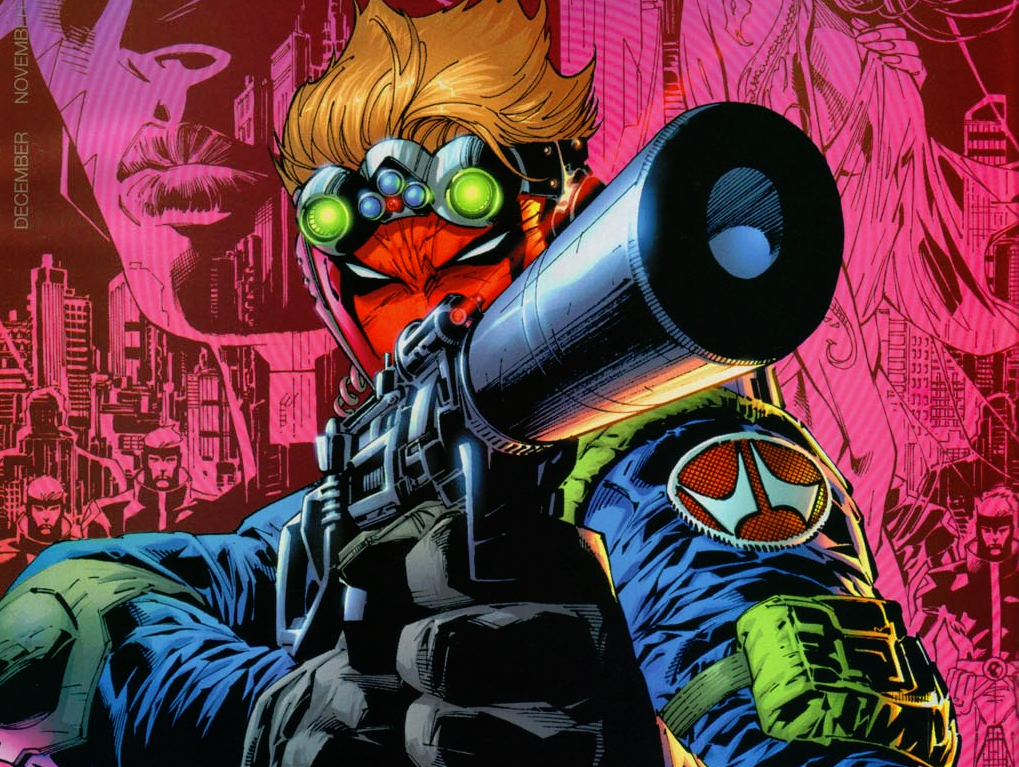
Grifter


  • Aspects
High Concept: Former special-forces sharpshooter/infiltrator
Trouble: Days you wake up crying..that’s when the mask comes in handy
Other: Zealot taught me a lot; This hero business is hard; Gen-Active

  • Skills
+5 Shoot
+4 Athletics, Fight
+3 Notice, Stealth
+2 Investigate, Rapport, Will
+1 Crafts, Drive, Empathy, Physique
  • Stunts
Uncanny Accuracy: Once per conflict, stack an additional free invoke on an advantage you've created to represent the time you take to aim or line up a shot (like In My Sights).
Quick on the Draw: You can use Shoot instead of Notice to determine turn order in any physical conflict where shooting quickly would be useful.
Hardcore Parkour: +2 to overcome actions with Athletics if you are in a chase across rooftops or a similarly precarious environment.
Danger Sense: You have an almost preternatural capacity for detecting danger. Your Notice skill works unimpeded by conditions like total concealment, darkness, or other sensory impairments in situations where someone or something intends to harm you.
Backup Weapon: Whenever someone’s about to hit you with a Disarmed situation aspect or something similar, spend a fate point to declare you have a backup weapon. Instead of a situation aspect, your opponent gets a boost, representing the momentary distraction you suffer having to switch.
  • Refresh: 3
  • Physical Stress: OOO
  • Mental Stress: OOO
Consequences:
  • Mild (2):
  • Moderate (4):
  • Severe (6):
Background/Facts:
http://dc.wikia.com/wiki/Cole_Cash_(Wildstorm_Universe)

***
Legolas


  • Aspects
High Concept: Elvish Bowman & Prince of the Mirkwood
Trouble: The ways of the young races are strange to me
Other: Watchful and wary; I shall not forget the slights against my people; Any challenge is welcome

  • Skills
+5 Shoot
+4 Athletics, Fight
+3 Notice, Stealth
+2 Investigate, Rapport, Will
+1 Crafts, Drive, Empathy, Physique
  • Stunts
Uncanny Accuracy: Once per conflict, stack an additional free invoke on an advantage you've created to represent the time you take to aim or line up a shot (like In My Sights).
Quick on the Draw: You can use Shoot instead of Notice to determine turn order in any physical conflict where shooting quickly would be useful.
Hardcore Parkour: +2 to overcome actions with Athletics if you are in a chase across rooftops or a similarly precarious environment.
Danger Sense: You have an almost preternatural capacity for detecting danger. Your Notice skill works unimpeded by conditions like total concealment, darkness, or other sensory impairments in situations where someone or something intends to harm you.
Backup Weapon: Whenever someone’s about to hit you with a Disarmed situation aspect or something similar, spend a fate point to declare you have a backup weapon. Instead of a situation aspect, your opponent gets a boost, representing the momentary distraction you suffer having to switch.
  • Refresh: 3
  • Physical Stress: OOO
  • Mental Stress: OOO
Consequences:
  • Mild (2):
  • Moderate (4):
  • Severe (6):
Background/Facts:
http://lotr.wikia.com/wiki/Legolas

***
Looking at the two examples above, although they have identical builds in terms of skills + stunts (and thus stress boxes available), we are clearly looking at two very different characters. 

Grifters 'Shoot' skill and 'Uncanny Accuracy' + 'Quick on the Draw' stunts represents his mastery of firearms; for Legolas, these represent years of hard training with a bow vs interlopers into the Mirkwood. 

Likewise, whereas Grifter's 'Danger Sense' is likely related to his Gen-Active aspect, for Legolas this is simply a reflection of his elvish gifts; elves are simply more aware than other folk.

It's the same with 'Hardcore Parkour': for Grifter, this is an expression of his overall badassery. For Legolas, this reflects his elvish grace. Same talent, different flavor. All informed by Aspects.

If Grifter draws a 'Backup Weapon', it's likely a holdout pistol. For Legolas, he might be using an arrow as a melee weapon. 

In any case, it's the aspects of the character that the define the narrative truth of what they do and why, where the other components simply define how well they are able to perform actions within a certain scope.

Aspects are therefore the foundational building-blocks when making a character in Fate, establishing who your character is before choosing what they can do well and not-so-well via Skills and Stunts. The aspects you choose define both your character, and the genre and flavor of the game that you are playing at your table.

***


Tuesday, April 22, 2014

Four-Color FAE: Supers Gaming via Fate Accelerated - pt12

Since I am still working on my second-session synopsis, I thought it might be fun share some of my villain builds with my readers in the interim. 
Here is the mystically-possessed super-villainess, Muramasa
***
Muramasa
  • Aspects
High Concept: Nice girl possessed by a demon-sword
Trouble: The sword grants me strength...and rage
Other Aspects: Fascinated by Japanese mythology; Niece of Zen-do; My enemies shall be cut
  • Approaches
+3 Flashy
+2 Quick, Sneaky
+1 Clever, Careful
+0 Forceful
  • Stunts
- As My Blade can Cut Through Anything, I gain +2 to Flashily Create an Advantage when using my fearsome sword against obstacles.
- Since I am as Beautiful as I am Deadly, I gain +2 to Flashily Create an Advantage when dealing with those susceptible to my physical charms.
- As I am Like a Leaf in the Breeze, I gain +2 to Quickly Overcome physical opposition that stands in my path.
  • Refresh: 3
  • Stress: OOO
Consequences
  • Mild (2):
  • Moderate (4)
  • Severe (6)
Power Facts
  • The demon-blade Muramasa grants Hana a warrior’s spirit and reflexes
  • Supernaturally enhanced, the blade can cut through anything not protected by magic
  • Hana quickly reverts back to her normal, easygoing personality if too-long removed from contact with the sword. In this form, her aspects are changed to reflect this, and her Flashy and Careful approaches are switched.
  • Background/Personality:
Quote: “This vessel tires of being a good girl; it’s more fun to be the bad girl. But you like bad girls, don’t you?”

Hana Mitsurugi is a student-teacher of Japanese Mythology at New Troy Pacific University, and the niece of Andrew Mitsurugi (aka. Zen-do).

When the Muramasa sword was brought to the New Troy Pacific Heritage Museum for display, she was excited to study it. But the evil sword soon gained a grip on her; causing her to evil acts at night that she would not recall performing the next day.

Eventually her nightly reign of terror was stopped by the hero Arrowhead in one of his early adventures, and the demon-sword was returned to it’s rightful place.

But the sword is now bound to Hana; and somehow the blade winds up again and again in her hands by happenstance, even though she professes to want nothing more than to be free of it’s curse.

***

Monday, April 21, 2014

Four-Color FAE: Supers Gaming via Fate Accelerated - pt11


New Sentinels member Arrowhead takes aim
As promised, here is a synopsis of the first gaming session of our Four-Color Supers game, New Sentinels, powered by FAE 
There is no discussion about game-mechanics in the synopsis itself, but I will be examining how they came into play in the postscript. 
***
Game Synopsis - New Sentinels, Issue 1: "With Great Power..." pt1

As evening sets upon the metropolis of New Troy, team organizer Emma summons the New Sentinels to their HQ, The Ready Room.

Jimmy (Quorum) is already on the scene, working upstairs at the Ready Room Bar & Grill as a bar-back. Excusing himself to his boss Molly (who knows that the bar is a front for the team HQ), he and Emma board the elevator down to the team HQ below.

Meanwhile, Touchstone Industries President Max Monroe is in a board meeting when he gets the call. Quickly ducking out of the meeting, he races across town at supersonic speeds, arriving just as the elevator doors close; already suited up and ready in his heroic identity...Mercury Man!

At this moment Lance (Arrowhead) is cleaning up throw-up on aisle 9 at H-Mart. Answering the call, he charms his female boss into letting him leave early, slowly making his way through rush-hour traffic via moped to meet up with the team.

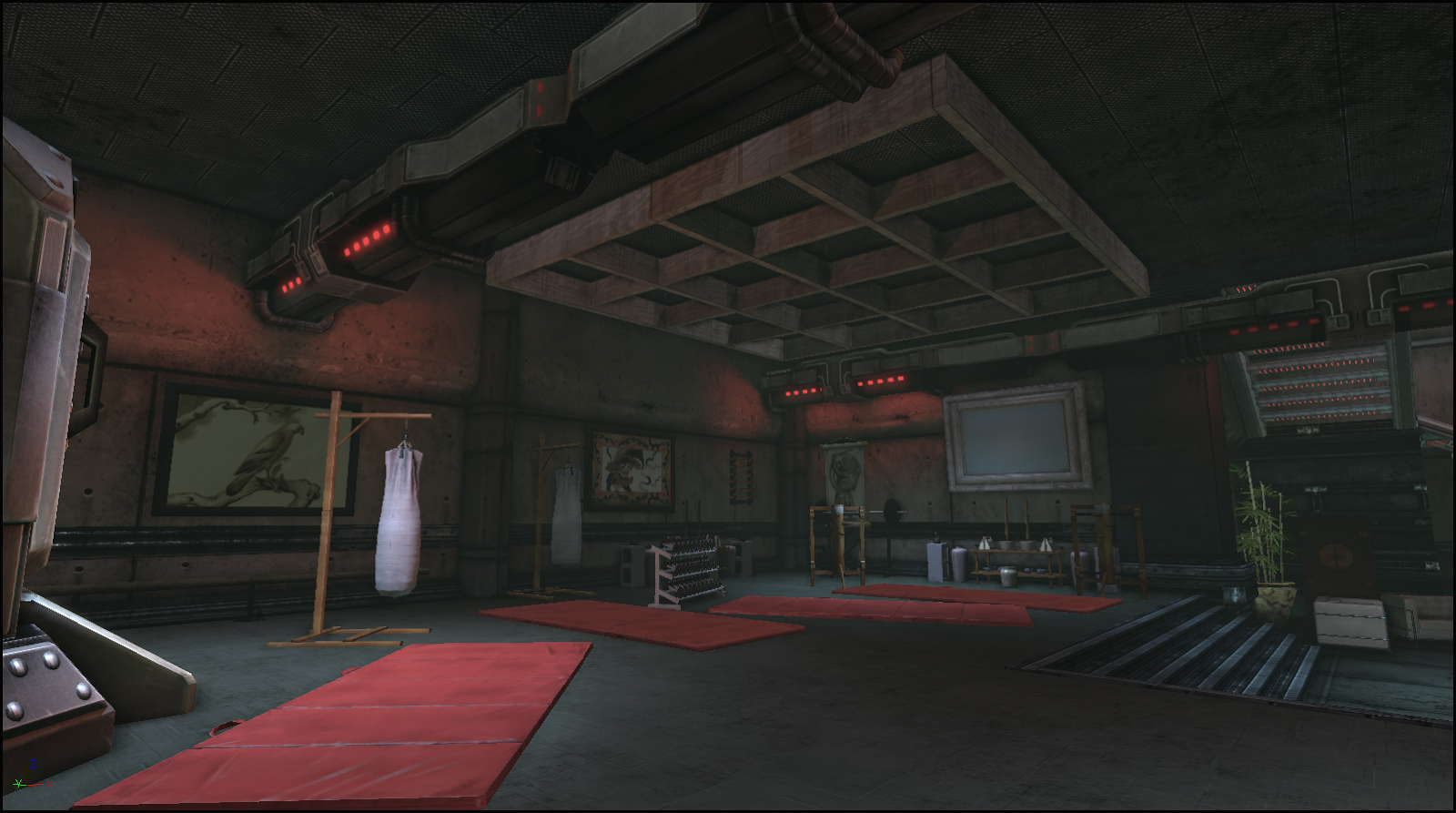
New Sentinels HQ, 'The Ready Room': interior
Manning the teams super-computer, resident teen-aged supers expert Taryn Reid gives the low-down along with Emma:

Although the Inca treasures for the upcoming 'Secrets of the Inca' exhibition at the Schliemann Museum of Antiquities arrived safe and sound, the Inca mummies bound for exhibition did not: and the panicked government of Peru has asked for the team's help, provided that they use the utmost discretion.

As Arrowhead finally arrives on the scene, the team decides to visit the landed plane formerly carrying the mummies, now parked in an abandoned airfield in Baja California, Mexico.

Mercury Man offers to race ahead and investigate, but Emma wants the entire team on this. So instead they load up the team jump-jet with Quorum piloting. The track lights guide the way to the hidden cliff side exit, and with a whoosh! the team is off and away.

*

Arriving in Mexico a few hours later, the team is confronted by skeptical Mexican federales. But Quorum - using his super-intelligence gained when split - has learned fluent Spanish on the flight: and while he distracts the police Mercury Man and Arrowhead investigate the abandoned airplane.

What they find there is disturbing: the pilot on the black box describes a bizarre 'green light' stopping the plane mid-flight, before cutting out completely. Investigating the cases holding the ancient mummies in the storage area yields even more worrisome information: they are clearly empty, and show signs of being broken out of from the inside.

The only other evidence left behind from this strange crime is a symbol - clearly Mesoamerican in origin - burned into the ceiling of the storage compartment of the craft.

All of which begs the question: what happened to the missing crew?

Quorum tackles the question with his duplicates - and finds evidence of footsteps leading into the wilderness beyond. Mercury Man acts immediately on this new lead, by racing into the night and searching every nook and cranny until he finds the missing flight crew and passengers: tied up, and dazed by thirst and exposure, but still thankfully alive. One by one he carries them at breakneck speed before depositing each on the tarmac.

At last useful, the Mexican federal police act to provide the surviving crew of the downed flight with food, beverages and blankets. Using the flashy charm he normally reserves for the opposite sex, Arrowhead is able to glean more information about the fate of the doomed flight from the now recovering crew and passengers:

Each remembers the strange green light surrounding - and then stopping - the plane, before they themselves were frozen in place by it.

Then memories of a presence- more felt than seen- moving through the plane, before it and a group of shambling figures led them into the woods, binding them helpless to the surrounding copse of trees.

Finally, they described a terrifying circle of greenish light, as the figures and their apparent leader vanished before their very eyes!

With this, our New Sentinels conclude that they have learned all that they could here: and further care of the members of the flight as well as the plane itself are best left to the Peruvian and Mexican governments.

Wary with concern about what they have learned thus far, our heroes re-board the jump-jet and begin the supersonic flight home.

While in the air they forward the photos taken of the mystic image burned on the plane's ceiling; Taryn's analysis reveals it to be a pre-Colombian representation of the Inca god Supay: Lord of the Underworld, and Prince of Demons.

Instinctively concluding that the next target of whatever force downed the plane might be at the museum itself, they vow to stand guard over the treasures there, waiting for whoever- or whatever- might come to claim them.

*
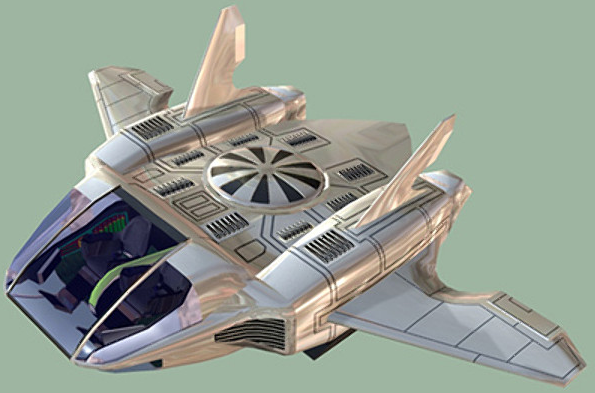
New Sentinels team Jump-Jet: CAD model shown
The jump-jet lands in the parking lot of the Schliemann Museum of Antiquities in the dead of night.

Having radioed ahead, the museum security team is already aware that the team is coming to help, and they are given the 'grand tour' of the museum by flashlight courtesy of security head George Smart.

While Arrowhead and Mercury Man enjoy the sights - Arrowhead being careful to stay within seeing distance of the Inca treasures - for his part, Quorum keeps one split in the museum, sending the rest out into the crisp April night air to patrol the perimeter.

Quorum notes how very quiet the Paris Hill neighborhood is compared to his own neighborhood, where the thin walls of his apartment shares the music, arguments and lovemaking to all that care to listen. But this reverie is broken up when he sees a flash of greenish light flare bright, and then quickly fade on the roof of the museum.

He then immediately radios a heads up the team; and true to form, Mercury Man instinctively races up to the rooftop to be first on the scene.

There he finds seven figures: swaddled head to toe in black ski-gear, complete with masks. Way too much coverage for a crisp spring evening....even for burglars.

Having caught his opposition by surprise, Mercury Man attacks one of the figures with lightning-quick speed; the figure loses it's balance in the tussle, and goes tumbling off the roof: landing with a sickening thud below!

Mercury Man has no time to wonder if he has accidentally killed a man though, as the remaining six figures rapidly close in on him with apparent murderous intent...

Meanwhile in the museum gallery below, Quorum regroups his splits into one before racing up the stairway to the rooftop. Not wanting to mess with the stairs, Arrowhead wills a psionic arrow and grappling line into being; he shoots into a skylight above, then contracts the line until he rapidly accelerates to - and through! - it, emerging from a spray of shattered glass onto the roof.

Mercury Man is grappled by a particularly burly interloper - but he manages to free himself at the cost of leaving part of his costume behind, and off-balance from the experience.

Arrowhead sees a teammate in trouble...but before he can react he catches the attention of two of the interlopers himself, who begin to make a bee-line straight towards him! He doesn't hesitate though: drawing back his 'bow' he fires a psionic arrow at one.

It falls lifeless to the floor; more than lifeless, really, as it seems to be frozen into place and lands like a fallen statue.

As Mercury Man dodges and weaves fluidly though the clumsy attacks of the cloaked figures, noting Quorum finally arriving at the rooftop door via stairs as he splits into his five duplicates...

The final panel of this issue is a splash-page; viewpoint behind Arrowhead's drawn bow, and looking towards Quorum and the Mercury Man surrounded by black-clad figures.

***
Postscript:
What I hope reads here as the tightly plotted first act of an action movie (mystery revealed, investigation, and first contact with the opposition), really was just a lot of me floundering as a GM to play catch-up with my players. It somehow had not occurred to me that the team would want to investigate the landed airplane itself, so I had to make up much of what they found there on-the-fly. 
Nor did I think that they would have the wherewithal to stake out the museum at night: during which time I had planned for exactly nothing to occur! 
But it all worked out pretty well either way, and when we wrapped things up that evening mid-battle both Pete and Gary (playing Quorum and Mercury Man, respectively) were excited to see what emerged next session. Arrowhead's player, Shay, was a bit less enthused- but that is a story for another day. 
There was a bit of a learning curve for everyone involved: this was the very first time Gary and Pete had played FAE - though both were familiar with Fate Core - and there was some discussion about what the characters could and could not do on occasion. Shay in particular struggled with this, as he is more accustomed and comfortable with 'crunchy' systems.
On my end, I suspect that the past year and a-half of fantasy GM'ing really impacted the flavor of the sort of narrative I was prepared to present in play: I played my cards close to my chest, and cranked up the 'mysterious' knob to eleven. Which isn't at all bad, just maybe not the tone I should have set for the campaign at the get-go. 
If I run another supers game in the future, I will instead follow my gut and start with a bank-robbery, or an adventure in an undersea base. You can't go wrong with either of those options. :-)
Having said all of that...the mechanics worked great! We had a speedster, an archer, and a duplication guy operating side-by-side with no real gap in overall effectiveness between any character. As this was the main design goal for using FAE to begin with, I'm putting the choice to use the system itself in the 'win' column.

***
Next Issue: Night Battle at the Museum!

***
The Ready Room (Google Docs)