Showing posts with label game theory. Show all posts

Friday, January 9, 2015

The Tao of Fate: Creating Challenging Opponents

When Fate players are ready to throw down with the opposition, the question arises: how do you as the GM make such an encounter challenging? Here are the tools that I use to create and tune enemy NPCs to provide a suitable level of danger for the PCs.

Glossary

I have three classes of NPC: "mooks", "named opponents", and "bosses". +Michael Moceri calls the middle group "lieutenants", which works as well.

General Guidelines

I generally present my NPCs' sheets to my players for inspection. I will leave off aspects or stunts which would reveal plot twists, but in general I've found that players who are on board with your program will go a long way toward producing an enjoyable combat, because you've set expectations up front about what their opponents are supposed to be like.

Number of Enemies

I populate a typical encounter with a number of NPCs between 2x and 2.5x the number of PCs. These will be brought into the fight in stages, between 1x and 1.5x the number of PCs at any given moment.

Michael Moceri's formula for a really tough fight, for N player characters, is N/2 bosses, about N named characters (or "lieutenants"), and between N and 2N mook units. This is between 2.5 and 3.5 the number of PCs.

Typically, you can use a 3:2:1 or 4:2:1 ratio of mook units to named opponents to bosses.

Mooks will make an appearance first, and named opponents or bosses will enter after that. This level of opposition gives a reasonably challenging fight and let the PCs move on without stopping to lick their wounds for too long.

You can use the Fate ladder to pick a specific number. Read down the ladder for a description of how hard the fight should feel ("Superb", "Good"). Divide the bonus (+5, +3) you see there by 2, and multiply by number of PCs in combat, and that's how many total NPCs (individuals or groups) you should plan for.

For example, a Superb challenge (+5) gives you about 2.5x (5/2) times as many NPCs as there are PCs. With four PCs, you'll have a total of 10 NPC units to bring in. You might decide this means 5 units of mooks, 3 named characters, and 2 boss characters. You might bring in 3 mook units and 2 named characters to start with, then add the others as combat progresses.

Aspects

Well-designed opponents have aspects that mesh with the PC aspects, the scene aspects, and the story aspects. There should be a clear emotional investment in the conflict, and a clear payoff for winning.

Skills and Approaches

I typically run games using FAE, so my text will say "approach" here. You can substitute "highest combat skill" for Fate Core.

If the highest approach rating your PCs have is "N", I give tough bosses a peak approach of N+1, named opponents N+0 in their area of expertise, and mooks N-1. For starting PCs, this would be +4 for bosses, +3 for named characters, +2 for mooks.

I build bosses as fully realized Fate characters, with stunts, approaches, and so forth. Named opponents outside of focus will be at N-2, and mooks will be N-3.

Stunts

Fights with named characters and bosses can feel "spikier" with some types of stunts, especially stunts that affect how the character does damage. For a smoother feeling in an attrition-style fight, go easy on assigning stunts.

Stress Boxes

The number and size of each NPC's stress boxes depend on their role:
  • Bosses and named characters get 3 stress boxes (1, 2, and 3) as a general rule.
  • Units of mooks have several (usually five) 1-point stress boxes.
  • Armored or tough mooks will get 2-point stress boxes, which helps them last longer against big attacks. They can still be knocked down with a bunch of 1-shift attacks.
Groups of mooks use the Hits and Overflow rules, allowing a single "unit" of NPCs to absorb incoming damage with multiple stress boxes in a single attack. Named and boss enemies use stress rules as normal.

Consequences

I assign a full suite of Consequence slots to bosses and other named characters, but usually not more slots than a typical PC will have.

Consequences are double-edged for an NPC to have, because inflicting one gives a free invocation to the attacker. This helps fill the gaps at the end of the fight when the PCs' free invokes (or players' creativity levels) are running dry.

"Monster" Opponents

There are ways to create "monster" opponents that are tougher than even a typical boss.
  1. You can create a single creature with multiple body parts, each of which can take action, be damaged, and so on. A kraken and its left and right tentacles is a typical example. Do this if you want the players to make tactical choices about where to focus their fire. +Randy Oest does a great writeup of this approach here: Tiered Opponents in Fate.
  2. The scale rules from the Fate System Toolkit can give flat bonuses to attack, defense, damage, and armor.
  3. Such opponents can have stunts that break the rules in ways that PCs shouldn't, such as every attack being zone-wide.
NPC Actions: Create Advantage

One of the big values for mook units is their ability to create unopposed situation aspects for their higher-level allies. How often they do this will affect how competent, organized, and deadly the opposing force feels. Barbarian hordes, beastmen berserkers, or mindless bug swarms will do this less often, preferring to spam Attacks on the PCs. Organized military units, experienced fire-teams, or hive-mind creatures will support each other by creating situation aspects.

NPC Actions: Overcome

Whether your NPCs should be overcoming PC-created aspects is a matter of taste. In general, I will have an NPC roll Overcome if I can think of a logical reason, and a logical method, for them to do so.

NPC Actions: Attack

If you want a "war of attrition" feel from your enemy units, have them mostly use Attack - this will gradually chew through PC resources at first, but will make them less deadly to the party. Enemies that are using smart tactics will let the highest-level unit in play (a named character or boss) roll the Attack.

A good rule of thumb for reasonably smart enemies is to have half as many Attack actions from your NPCs as there are active NPCs. Other NPCs should be rolling Create Advantage or Overcome to support their allies.

NPC Actions: Defend

Typically, very high Defense rolls from your NPCs will be boring. Fate by its nature already encourages people to stack advantages and unleash big attacks. Forcing the players to do even more of this deprives them of a feeling of progress in the fight. Instead, letting them win a series of victories against lesser opponents gives them a sense of satisfaction.

Victory Conditions: Compels

Many interesting fights can end on a Compel - in either direction. For example, a boss who compels "Endless Waves of Mooks" to force a surrender from the PCs, or players who invoke "I Will Redeem My Brother" to make an evil brother NPC repent long enough to take him captive.

Victory Conditions: Concessions

Some genres, like four-color superhero games, make concessions the preferred way out of a combat.

I try to use concessions as character-establishing moments for new NPCs. For example, in my scifi game the PCs wanted to blow up an enemy power plant. The sub-commander assigned to take care of them showed up and started sniping. As a dedicated and loyal officer, she did a couple of almost-suicidal moves trying to take out the PCs.

They finally managed to knock her down far enough for her to be at risk. I offered a concession: "she bites down on a poison tooth, and manages to tell you that only her allies have the antidote". Since the person who had been fighting her had a moral code against unnecessary killing, they left her behind to be found and rescued, and left the scene with the generator destroyed. It conveyed the impression I wanted - someone who was doing her duty, and refused to be taken captive, but who didn't particularly want to die and felt a degree of trust in the PCs' motives.

Conclusion

Play with the four major slider bars you have: "number of actions", "peak skill", "damage capacity", and "tactical acumen". Customize your characters. Try new ways of building monsters. Go nuts. Don't be afraid to cheat.

Thanks for reading, and please leave feedback or opinions in the comments!

Tuesday, October 7, 2014

Campaign and adventure design using fronts and the 5x5 system

"Plans can break down. You cannot plan the future. Only presumptuous fools plan. The wise man steers." -- Making Money
I've tried different approaches to campaign and adventure design over the years, from fully improvised to meticulously plotted. Here's the style that I'm now using for a new Fate Accelerated game. It draws from three concepts:
  1. Dungeon World fronts, described here.
  2. The 5x5 adventure design method, described here.
  3. The Five Room Dungeon model, described here.

Framing the campaign

Start with a set of "powers" - the big movers, shakers, and influences of the setting. I write these up using Dungeon World's fronts as a template.

----

The Star-Storm Attacks!

Power: The Star-Storm
Motive: Travel the star-ways, attacking, enslaving, and consuming to grow mighty
Progress:
  1. Attacks on frontier worlds
  2. Assimilation of provincial planets' populations
  3. Conquest of a major star system
  4. Assimilation of one Imperial Armada fleet's forces
  5. Assimilation of a provincial capital planet
Endgame: The Star-Storm establishes a solid presence in Imperium space.

Power: Separatist Armada forces
Motive: Resist the Star-Storm for the glory of the Imperium - at any cost
Progress:
  1. Militarization of a civilian shipyard
  2. Seizure or impressment of Imperium resources & citizens
  3. Loss of civil rights on a threatened world
  4. Ruthless suppression of protesters on various worlds
  5. Imposition of martial law across the province
Endgame: Armada forces establish a totalitarian, militaristic government through coup.

----

"The Star-Storm Attacks!" is a campaign plotline. Each power within it can be hostile, friendly, or neutral to the other powers within the plot. A given power can appear in multiple plots. What the powers should have in common is opposition to the PCs' goals in some way.

The point of writing these plots is to understand your campaign's opposition as a character. What do your big players want? What means are at their disposal? What's their final objective, and how will they get there? Once you know these things, you'll have a good sense of when and how the PCs learn of their activities.

Framing the adventure

For each adventure, I draw out a five-by-five grid, with row and column labels, like this:


Gateway Challenge Tension Climax Twist
Adventure issue


First sign of progress


Second sign of progress


First minor issue


Second minor issue


On the left are the issues that the adventure will include. I pick one that's specific to the adventure itself, and then two more that indicate progress by different powers toward their respective endgames.

For example, an adventure issue could be "stolen government documents": the PCs are tasked with retrieving these, lest some calamity befall the planet. The Star-Storm and the Imperial Armada are both making their first moves here as well: "attacks on frontier worlds", and "militarization of a civilian shipyard". I'll pick two other minor issues: the "disappearance of a diplomat's daughter", and a "bounty hunter that's been hired to take care of one or more of the PCs".

The elements across the top are drawn from the "five dungeon rooms" concept. They represent progression of the story, going from left to right:
  • The gateway is what keeps people out. It's why nobody else has solved the problem, or what the PCs must do to get in the door, so to speak. This can be a minor obstacle to overcome, or just a roleplaying challenge, but should really serve to set the tone for the rest of the plot.
  • The challenge is the first major problem the PCs must overcome. It won't fully put the plot to rest, but it creates the circumstances for that to happen.
  • The tension is where conditions change, become more difficult, and so on. This can be a red herring, but should provide some sort of payoff even if costs the group something. It can also redefine the conflict, or reveal the real plot.
  • The climax is where events start to accelerate and spiral to a cool conclusion. It can be the big (real) fight, the true boss, or whatever the real nature of your plot turned out to be.
  • The twist should be more than just the conclusion following the climax - it should serve to move the larger story forward.
This is somewhat similar to the five-act structure in Shakespeare's plays, as masterfully smashed into words by Film Crit Hulk here.

In addition, it's helpful if elements of these plots connect to each other. For example, I've got the Imperial armada taking over a shipyard on the planet. Why do the PCs care? Because their ship is docked there, so they have to somehow get it back. The bounty hunter may be lying in wait near the ship and attack as they come out. And as the Imperial armada is taking over, it may come to light that the missing diplomat's daughter ran off with one of its officers. And so on.

Filling in the blanks

With all this in mind, let's fill in the table with some specifics.


Gateway Challenge Tension Climax Twist
Stolen government documents


Star-Storm attacks on frontier worlds PCs intervene when some refugees are hassled by authorities


Militarization of planetary shipyard PCs are evicted from their own ship! By hook or by crook, get access to ship


Disappearance of diplomat's daughter


Diplomat's daughter took the documents
Bounty hunter
Survive the bounty hunter's ambush


"But the table isn't completely filled in," you say. That's right - you don't need to pre-plan everything. What is the purpose of the table then?

The point of the table is to structure your brainstorming and improvisation. Rather than staring at a blank piece of paper and starting with nothing, I've got about 25 boxes to fill in with specific moments. As ideas come to me, I can add them to the table.

How do you figure out what goes into each of these stages? The end of each stage should provide propulsion and finality. Propulsion means "the plot naturally moves forward". If there was a wrong, it must be avenged. If there was a MacGuffin stolen, it must be recovered. And so on. Finality means "the PCs can't return to the previous status quo". Someone important has died, or a revelation has occurred, or whatever.

Even if you reach the session with some of the table unfilled, this is fine - let your players' actions suggest the missing pieces. What you have is a set of ideas around which you can let the action flow.

Reviewing what you have

After you've got a list of plots in play, go back and think about them in light of your players and the PCs. Do any of them sound like things the PCs wouldn't care about? If not, see if you can revise the offending plots to be more interesting.

Since I'm using Fate Accelerated, I look at each box in my 5x5 grid and think about the resolution that each one calls for. Can I do it in a single die roll, or should I use a Challenge, Contest, or Conflict? Should I do something unique? And do I have a plan if the PCs fail? Not every individual plot needs to reach its conclusion - if one ends early, you have others that are still active.

Review the NPCs that each plot calls for. Do they need stats? If so, do you already have appropriate stats?

Conclusion

In short: design the major players and their overall plans, then plug each step of those plans into your adventure as a plot line, mixed with a small-scale plot specific to the adventure.

Not every adventure needs this much complexity. "Skyjack That Shuttle!" can be very straight-forward. But for those adventures where several competing forces are in play, or that should feel like significant turning points in the larger story, this model seems like it will work well for me. Hopefully you will find it useful as well.

Thursday, June 26, 2014

The Tao of Fate: Challenge, Contest, or Conflict?

It's not always obvious how to stage a particular dramatic encounter in Fate. The game provides tools, such as rules for Challenges, Contests, and Conflicts. To pick the right tool for the job, I think of three things: stakes, momentum, and exit points.
----
Stakes

For every encounter, start by asking: what's really at stake? What do the PCs get if they win, and what do they lose if they fail?

Something that would end the story on failure is never a good stake. Usually, this includes "the lives of the player characters", outside of a deliberately lethal conflict. If that's really what's on the line, you should rethink what the PCs are fighting for. Wherever possible, the stakes should reinforce the story being told, and they should be appropriate to the genre of your story.

If Superman is rescuing a crashing jetliner in his own comic book, and Lois is on it, then you can be pretty sure that Lois Lane isn't going to just die, because that will be jarring for the readers of a Superman comic book. Something else must be at risk. If Lois was injured badly enough in the rescue, would Superman be distracted from something more important? Would a villain be able to advance his plan further if the Man of Steel was in the hospital sitting by Lois' bed? Balancing his responsibility with his humanity is a core part of Superman's story, and those sorts of stakes reinforce his nature.

Changing Stakes

Sometimes, the stakes only become apparent as the encounter resolves itself. In "Blade Runner", during the final fight between Deckard and Roy Batty, Roy is already dying, and he knows it. Over the course of the conflict, the real stakes are eventually revealed: does his life matter? Will he leave behind any sort of legacy? Deckard is the last chance he has to make that happen. The stakes for Deckard seem to be his own survival, but they shift to protecting his identity. Can he keep being who he was? Does he want to?

If your group realizes that something has changed, it's perfectly legitimate to stop the currently running Challenge, Contest, or Conflict, or to reframe it in the new terms. In the Deckard vs. Batty Example Fight from Richard Bellingham (discussion thread here), this is exactly what happens, as the physical conflict becomes a mental one.

Momentum

In "Indiana Jones and the Temple of Doom", Indy, Willie Scott, and Short Round are riding the rails in mine carts. Their goal, of course, was to avoid the villain's henchmen and get out of the mines safely. Shorty was explicitly told which route to take.

Did they go that way? Of course not!

Did failing to go the right way end the story? Of course not.

A good encounter works like a mine cart ride: no matter where you go, you have to keep moving. Like mine carts, a story is always worse if it derails than if it takes a new route. Don't fear failure - instead, fear not having a new direction to offer the group if the dice don't work out.

Exit Points

So what should you use - a Challenge, a Contest, or a Conflict - to model an encounter? For me, it depends on the ways the participants can leave it. Do these exit points center around the stakes (Contests), the participants (Conflicts), or the situation (Challenges)?

Contests have twists and turns, as rivals try to outmaneuver each other, but you're all still heading toward something or away from something. Everyone exits the encounter when one or another got where they wanted to go.

In a Conflict, exit points always come at a cost. Nobody makes it out in the same shape they came in, unless they bought their victory with hard work, effort, and good fortune. Even concessions carry a price.

In a Challenge, there's many ways to exit the encounter, with the PCs winnowing down the possibilities. Sometimes they get the outcome they most want. Sometimes they compromise. Sometimes they're left with a terrible choice. But the exit point they get to use is one they can afford with their resources of skill, Fate points, and luck.

----

Challenges, Contests, and Conflicts are tools. They offer a way to challenge your players and provide a believable, if sometimes surprising, outcome. Once you have a sense of what the PCs are risking, and an idea of how their actions will carry them from scene to scene, you will be able to choose the right tool for the right job.

Thursday, June 12, 2014

Four-Color FAE: Supers Gaming via Fate Accelerated (update)


Hello dear readers! Its been a while since I posted here, and for that I apologize. That being said, the Games continue to be played! We're 10 issues in on our Supers game, using the Four-Color FAE guidelines, and we plan on posting a great deal more about it soon.

In the interim, I'd like to share a very well-written series of posts by one of the players in our group, +Bill Garrett. Bill has distilled down many of the core tenants of not only creating a Supers game, but how the genre works in general - with the unique lens of Villainy. Its a great read!

You can find his thoughts and analysis here: Not only is it educational, but he has a very fun style.

Monday, May 26, 2014

The Building Blocks of Fate/Fate Core pt1: Aspects


I have spent a lot of time on this blog talking about the Fate RPG: in fact, based upon the number of posts on the subject, Station53 is largely a Fate blog.

The latest and (arguably) greatest version of Fate so far is the most recent version, Fate Core. Whatever flavor of the Core system you prefer - Core RAW, FAE, or the innumerable variants that are on the market right now - the newest incarnation of Fate is the most streamlined and cohesive version of the system to date.

Generic RPG systems almost always disappoint in some fashion. And Fate is no different than other systems in this regard (a sideways glance to GURPS at this moment..). Although the system supports a wide variety of genres, there are certain assumptions that apply to any Fate game. Per the book:
Fate doesn't come with a default setting, but it works best with any premise where the characters are proactive, capable people leading dramatic lives. #
To tastes, however, this exactly the sort of game I prefer to play 95% of the time, so I would consider this limitation a feature rather than a bug.

So what is the 'Core' part of Fate Core? Per the system's original co-creator Fred Hicks, it's every component that makes up the game: http://www.faterpg.com/2011/the-core-of-fate-core/

To my eyes, however, the 'core' of any version of Fate (or FATE) is the idea of Aspects. From the beginning, this has been the key mechanic that differentiates Fate from other game systems, including it's parent system FUDGE.

So what do Aspects do? Lots of things really. But in brief:
  • Aspects establish facts. Which means that..
  • Aspects define characters. Which means that..
  • Aspects define genre.
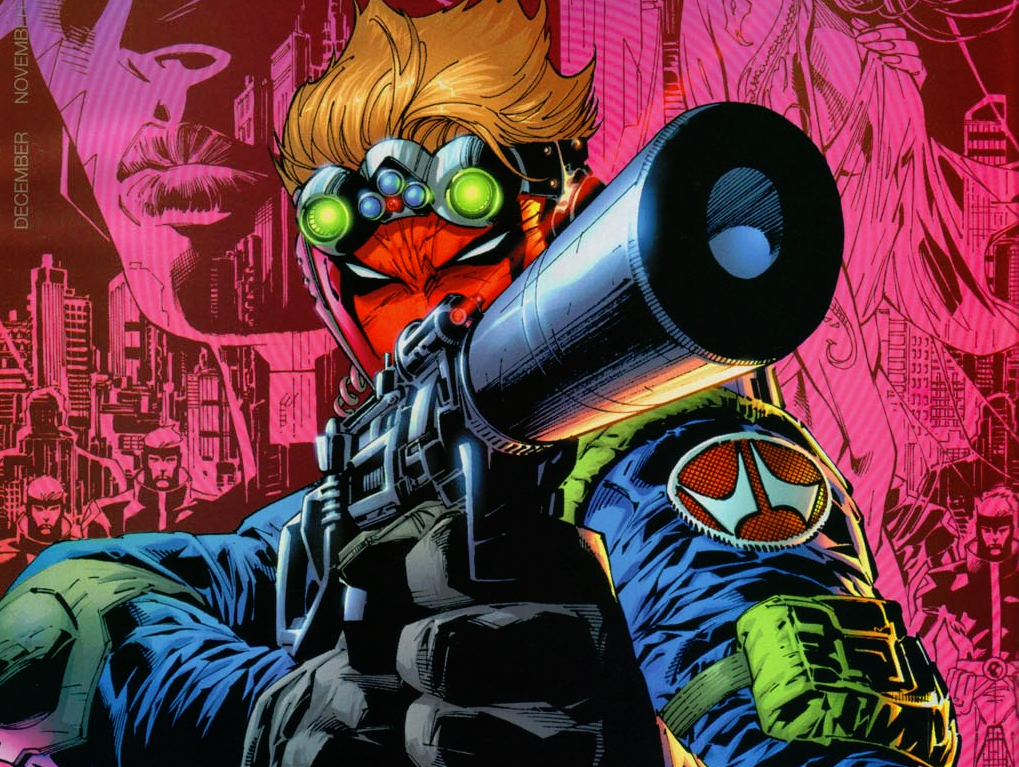
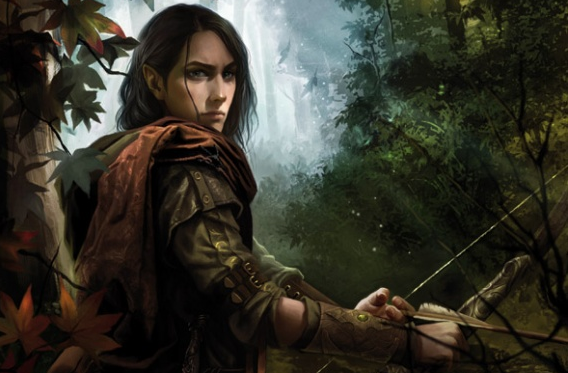
To demonstrate the breadth of this idea, let's look at two characters using the same overall build - same skillsets, same stunts- but different aspects. In this example, I have chosen the Grifter (Wildstorm/DC Comics) and Legolas from Lord of the Rings

***

Grifter


  • Aspects
High Concept: Former special-forces sharpshooter/infiltrator
Trouble: Days you wake up crying..that’s when the mask comes in handy
Other: Zealot taught me a lot; This hero business is hard; Gen-Active

  • Skills
+5 Shoot
+4 Athletics, Fight
+3 Notice, Stealth
+2 Investigate, Rapport, Will
+1 Crafts, Drive, Empathy, Physique
  • Stunts
Uncanny Accuracy: Once per conflict, stack an additional free invoke on an advantage you've created to represent the time you take to aim or line up a shot (like In My Sights).
Quick on the Draw: You can use Shoot instead of Notice to determine turn order in any physical conflict where shooting quickly would be useful.
Hardcore Parkour: +2 to overcome actions with Athletics if you are in a chase across rooftops or a similarly precarious environment.
Danger Sense: You have an almost preternatural capacity for detecting danger. Your Notice skill works unimpeded by conditions like total concealment, darkness, or other sensory impairments in situations where someone or something intends to harm you.
Backup Weapon: Whenever someone’s about to hit you with a Disarmed situation aspect or something similar, spend a fate point to declare you have a backup weapon. Instead of a situation aspect, your opponent gets a boost, representing the momentary distraction you suffer having to switch.
  • Refresh: 3
  • Physical Stress: OOO
  • Mental Stress: OOO
Consequences:
  • Mild (2):
  • Moderate (4):
  • Severe (6):
Background/Facts:
http://dc.wikia.com/wiki/Cole_Cash_(Wildstorm_Universe)

***
Legolas


  • Aspects
High Concept: Elvish Bowman & Prince of the Mirkwood
Trouble: The ways of the young races are strange to me
Other: Watchful and wary; I shall not forget the slights against my people; Any challenge is welcome

  • Skills
+5 Shoot
+4 Athletics, Fight
+3 Notice, Stealth
+2 Investigate, Rapport, Will
+1 Crafts, Drive, Empathy, Physique
  • Stunts
Uncanny Accuracy: Once per conflict, stack an additional free invoke on an advantage you've created to represent the time you take to aim or line up a shot (like In My Sights).
Quick on the Draw: You can use Shoot instead of Notice to determine turn order in any physical conflict where shooting quickly would be useful.
Hardcore Parkour: +2 to overcome actions with Athletics if you are in a chase across rooftops or a similarly precarious environment.
Danger Sense: You have an almost preternatural capacity for detecting danger. Your Notice skill works unimpeded by conditions like total concealment, darkness, or other sensory impairments in situations where someone or something intends to harm you.
Backup Weapon: Whenever someone’s about to hit you with a Disarmed situation aspect or something similar, spend a fate point to declare you have a backup weapon. Instead of a situation aspect, your opponent gets a boost, representing the momentary distraction you suffer having to switch.
  • Refresh: 3
  • Physical Stress: OOO
  • Mental Stress: OOO
Consequences:
  • Mild (2):
  • Moderate (4):
  • Severe (6):
Background/Facts:
http://lotr.wikia.com/wiki/Legolas

***
Looking at the two examples above, although they have identical builds in terms of skills + stunts (and thus stress boxes available), we are clearly looking at two very different characters. 

Grifters 'Shoot' skill and 'Uncanny Accuracy' + 'Quick on the Draw' stunts represents his mastery of firearms; for Legolas, these represent years of hard training with a bow vs interlopers into the Mirkwood. 

Likewise, whereas Grifter's 'Danger Sense' is likely related to his Gen-Active aspect, for Legolas this is simply a reflection of his elvish gifts; elves are simply more aware than other folk.

It's the same with 'Hardcore Parkour': for Grifter, this is an expression of his overall badassery. For Legolas, this reflects his elvish grace. Same talent, different flavor. All informed by Aspects.

If Grifter draws a 'Backup Weapon', it's likely a holdout pistol. For Legolas, he might be using an arrow as a melee weapon. 

In any case, it's the aspects of the character that the define the narrative truth of what they do and why, where the other components simply define how well they are able to perform actions within a certain scope.

Aspects are therefore the foundational building-blocks when making a character in Fate, establishing who your character is before choosing what they can do well and not-so-well via Skills and Stunts. The aspects you choose define both your character, and the genre and flavor of the game that you are playing at your table.

***


Tuesday, January 21, 2014

Game Theory: What's on the menu?

Say what you like, Pathfinder's got Class

It's 1985, and my friend Brian (a huge fan of the newly published Dragonlance novel, Dragons of Autumn Twilight) convinces me to purchase the D&D Red Box at the local Toys "R" Us so we can play a game with a similar cast of characters that he had come to love in that series.

Getting back to his house with our newly obtained loot, we open up the box and start reading (after marveling after the odd dice and little crayon included, along with the map). 

We start with the one marked Player's Manual, as it is inscribed with bold yellow letters saying: READ THIS BOOK FIRST! The color, the fact that it's in all caps and with the added '!' indicates that this is an important prerogative, so we dutifully comply. 
Immediately we find that the book gives us a series of options to play characters; this is not some free-form improv-theater piece where you just make up a guy and bluff your way through. It's hard-coded with options that reinforce what sort of characters are expected to appear as protagonists are expected to appear in this world. These options were:

Humans (Yay! We are human, and we get to pretend that we are other humans!)

  • Cleric
  • Fighter
  • Magic-user
  • Thief
Demi-humans (Yay! We are human, and we get to play things that are almost, but not-quite human!)

  • Dwarf
  • Elf
  • Halfling
Now, I had bought this game to play a Magic-user - since magic is cool - so I knew immediately what 'Class' of character I wanted to play already (although I looked REALLY hard at the Elf as a option. He gets to do magic AND he's good at fighting? Money.)

So I rolled up my character as per the book, didn't get a high Intelligence (which the book said I HAD to have to even play a Magic-user), so Brian and I agreed that it would be OK to switch some numbers around to facilitate that. 

Time from reading my first RPG to hacking my first RPG? About 1 hour.

From there I picked out a few weak first-level spells, choose some languages I knew, a bought some gear with what little money I had from the gear list, and went into my first dungeon (and somehow survived it, which is a wonder to this day).

Looking at the most recent version of D&D today, although a lot has changed (Elves and Dwarves and Halflings are still there, for example, but they are no longer 'Classes') the fact remains that the system is still very much menu-driven: rather than being given limitless options to make the character you envision, instead you are given a 'menu' of options to choose from, and build around that. 

You choose:
  • Your Race
  • Your Ability Scores
  • Your Class
  • Your Skills, Feats, Powers, and Equipment (as appropriate for your Class)
  • Your Alignment
Once this is resolved, voila! You are ready to do some D&D. 
Make sure to fill in all the circles, please.
As per the original D&D, the 'menu' concept continues from there as you play; as you gain Experience Points (the meta-resource for the game that enables you to gain new abilities), you are given new options to build upon your abilities. But as offered in character creation, the decision-tree presented for advancement is determined by the original choices you made for your character when you started. The choices you make simply offer new sub-menus with limited numbers of new options you can add to your character.

Every RPG system to date has some form of menu available to choose what sort of character you are playing, and what they can do well or not-so-well. Some of the lists can be bigger and offer more choices than others (GURPS, for example, has a mind-boggling number of options right out of the box), and some smaller (indie-darling Dungeon World has a relatively small menu to choose from vs 4e), but there is still a menu regardless.

Why is this? Why do we want or need a menu at all? Why can't we just say: 'Here's my character, this is what motivates him, and this what he is good and bad at', and hit the gaming table with that?

Well, menus do a few key things for RPG's:
  • Menus reinforce genre. Having a game where the options include Cleric, Wizard and Fighter but does not include something like 'Cyborg' tells us a lot about the world the characters are expected to appear in.
  • They also help define Party Roles, which is important for team-based play; a state assumed by 99% of the RPG's on the market.
  • Menus (in theory..) promote game-balance. By clearly defining what sort of abilities can appear on the table in any combination, you can limit Mary Sue-ism and reinforce party roles, as above.
  • Having a menu also helps players to decide what sort of character they will play by defining what sort of character is allowed in the game. If you have no clear idea of what sort character you want or what traits they should have, having a limited list to choose from is of help.
But it's not all gravy. Menus also limit you in some key ways as well:
  • They limit your options. Want to play a Fomorian princess-in-exile who can cross between the Otherworld and our own? Too bad; that's not in the book. 
  • They limit imagination. You want your wizard to cast a huge spell that impresses the frost giants into aiding your cause? Too bad; you have nothing that allows that on your character sheet. Think of something else.
  • They can also create the bizarre netherworld of 'Character Optimization'; a term that comes up often in reference to D&D 4e and her prettier and more popular sister, Pathfinder. Just because you have more than one option to choose from when creating and advancing your character doesn't mean that they are all equally useful. Which segueways us well to the next issue...
  • Menus promote samey-ness. If my optimized fighter with optimized gear looks just like your optimized fighter with optimized gear at Gen-Con, it's like two girls in the same dress at the prom. Neither one of us looks very unique or interesting next to the other. 
My current interest in more 'rules-light' systems like Fate or Heroquest is not because I hate all-the-damned-rules; I've happily played and run games with all-the-damned-rules just fine, thank you very much.

The main appeal for me is that these sort of systems allow me to play what my imagination summons up without having to either hack the system, make my own playbook from scratch, or ignore some rule to make it work. In other words; I have the freedom to order something not on a menu.
Dagger-wielding cultists, evil robots, and a zeppelin? Huh, guess it's Wednesday already.
As a GM, I have always had the freedom to make my NPC's as I like with just about any RPG on offer. But as a player I want to have that same freedom when making and advancing my character, and as GM I would like my players to have that same freedom as well.

Note that this sort of freedom is not by necessity limited to 'rules light' systems either; Mutants & Masterminds grants a massive number of options for character creation, and allows the player to pre-flavor them as desired, as does the ever-popular Savage Worlds (although Savage Worlds could be described more as 'rule-medium' at worst).

It's no secret that my current RPG drug-of-choice is Fate. I've been tinkering with it since I first discovered it as FUDGE-hack, and for the same reasons noted above; because it allows me to make the character I want to play at the gaming table straight-out, and not some compromise that some distant game-designer thought I might like to play; nor do I have to wait until I've reached some arbitrary 'level' to play them.

In Fate, for example, if I want to play a wizard with Hands burned by the cold fire of the underworld, who has Shadow-demons that respond to my whispered commands, I can. No hacking required; just add those Aspects, some Skills or approaches to reinforce this, and maybe some Stunts and/or an Extra to back it up, and 'boom!': I'm ready to do some Fate.

For me, this is all-kinds of awesome. I'm now given permission to play what I want at the gaming table, and my friends are as well. 

As noted above, however, there is a trade-off here; by abandoning a menu-based system we have opened the possibility for confusion. With no road-map, with no clear path to create characters, we are now largely left our understanding of the system to create characters; and this is often a scary path for new players and even new game-masters.

In many ways this is the main failure of Fate Core in particular; by not providing a good number of examples for creation of characters (something I think Savage Worlds and Mutants & Masterminds in particular does well), new players are largely left adrift at sea when making sense of what the system can do. That's unfortunate, and I hope that some of my posts here might assist in that regard.

That being said; despite the difficulties involved, for me the effort is worth it to make the characters we want to play appear at the gaming table.

It may be the chef's (game-designers) pots, pans and range we are using, but we get to pick the ingredients now. And we have free-run of the kitchen:

So let's get cooking.

***

Monday, January 20, 2014

Four-Color FAE: Supers Gaming via Fate Accelerated - pt4

Continuing my series about supers gaming in FAE, in this post I discuss the use of Extras with my group.
Part 1 here.
Part 2
Part 3

***
Extras in Fate Accelerated
Just where does he get all those wonderful toys?
You may note that in all of my builds I devote an area to Extras for each character.

In Fate Core, Extras are largely objects or powers that expand the scope of character abilities beyond the standard options offered in Chapters 1-10.

But in Fate Accelerated, your character aspects can do that by themselves.  So what are 'Extras' in FAE?

Exactly that: extras.

Batman is still Batman without his Batmobile, or his Bat Plane, or even without the Batcave. He has these things even without needing them as his core (his main five) aspects.

But without them, the Bat has no way to get where he wants to go, and nowhere to rest when he is not in action. So although these items may not be essential, they are part of the character's mythology and are worth noting.

In short: Extras are there to round out your character. You may start with 0-3 as your starting character, and acquire more in play.

In brief:

* Extras are aspects, and work as other aspects do.
* Extras are fragile; they are things that are subject to change or even being lost in play.
* Extras are never character-defining. Captain America's van is an Extra: his shield, however, would be one of his five main aspects.

We will talk more about Extras during character-creation, including the possibility of adding team extras to add some flavor and expand the options of the group.

***

Sunday, January 19, 2014

Four-Color FAE: Supers Gaming via Fate Accelerated - pt3

In part three I examine the Approaches of Fate Accelerated vs the Skills offered in Fate Core.
Part 1 can be found here.
Part 2 linked here.

****
Approaches vs Skills in Fate 
That's goddamned right.
When looking at FAE vs Fate Core, the first question asked is usually:

"Wait - but what can I do?"

This a reasonable question. Although Fate 2.0+ handily replaced the standard Stat + Skill rubric used by traditional RPG's with just Skills, FAE goes another step further still by saying:

"What you can do isn't interesting - it's HOW you do it that matters in the fiction."

But this still leaves open the question: what can you do? And what do you do well, or not so well?

As noted in my previous post discussing Power Facts, aspects are asked to do an extraordinary amount of the heavy-lifting in FAE; in-fact, much of what is defined by Skills and Extras in Fate Core.

Therein lies the answer: you can do what your aspects say that you can do. How you do them, and how well, is defined by the strength of your approaches:

  • Sneaky: Stealth, Deceit and Misdirection
  • Clever: Intellect, Games and Puzzles
  • Quick: Speed, Agility, and Fast Decisions
  • Careful : Wisdom, Awareness, and the Measured answer
  • Forceful: Strength of Body and Will, the direct approach
  • Flashy: Charismatic, Obvious and Overt actions.

What are the benefits of approaches vs skills then?

Approaches reinforce the main goal of Fate in a key way: by underlining Character Competence.

When you are using your primary or secondary approach to achieve a task, you are both confirming your character's competency at this sort of task, and confirming your character's preferred method of resolving issues. Both are great for role-playing, and underline what is already great about Fate as a system.

Coming back to the original question though: where are your skills? What can you do, and not do so well?

The answer is that the Skills are still there, but they now appear in the background. The question of whether you prefer to Provoke your opposition (a Forceful approach) or use Rapport (a Flashy approach), or simply to Deceive them (Sneaky) is based largely upon what your preferred approach happens to be.

The scope of where these actions might be applied, and how, is largely defined by Aspects and Stunts, as per Fate Core.

So in summation: what can you do in Fate Accelerated? The answer is this: you can do whatever you can justify narratively, just like in every previous version of the game.

***
Additional reading:

Fred Hicks on 'One-Note Approaches'
Clark Valentine on FAE “vs” Core

Saturday, January 18, 2014

Four-Color FAE: Supers Gaming via Fate Accelerated - pt2

In part 2 of this series, I discuss character roles in team-based superhero characters with my group. 
Part 1 can be found here.
****
 Character Roles in the Supers Genre

Team-based supers tend to differ from characters that guide their own books in a key way: team-based heroes tend towards a particular role in the group that allows them to stand out when facing specific challenges.

Even when characters like Batman or Superman (who normally operate solo) are added to a team like the Justice League, they are usually simplified to fill particular roles within their respective teams.

A good supers team is therefore like a good D&D party: each character brings something to the table to round out the strengths and weaknesses of the others.

Let's view the classic Silver Age hero team The Fantastic Four through this prism:

Thing - Fighter/Tank (Peak: Forceful)
Invisible Girl - Rogue (Peak: Sneaky)
Human Torch - Ranger (Peak: Flashy)
Mr. Fantastic - Wizard (Peak: Clever)

Individually, each of these heroes only brings one main approach to the table that they are particularly good at. Each might therefore be considered a minor-level hero. But together, they are able to handle cosmic-level threats with ease. A great, well-balanced team. Which I think goes far to explain their continued popularity after five decades worth of stories.

When creating characters for our game, regardless of the powers and backgrounds we choose, it's good to consider:

* What strengths does this character bring to the table? What are their weak spots?
* How do our characters work together as a team?

Many of these questions will be answered in play as well, of course. But thinking about them during character creation will help us to create a strong base to build upon as we find their individual stories.

***

Friday, January 17, 2014

Four-Color FAE: Supers Gaming via Fate Accelerated - pt1


Roughly four months after posting my first supers build (and my first Google+ post!) using Fate Accelerated, I'm finally going to be running my first supers game using the system here in Seattle. 
Needless to say, I'm stoked!  
To introduce my players to my concepts using the system, I have been posting a series of 'primers' to our game community. Seeing as they might be of use to others as well, I am also sharing these to the site. Note that I will be covering some of the same ground covered by earlier site posts, but specifically tailored to what the system brings to a supers game.
***
Power Facts in Fate Accelerated

As in all Fate games, the most powerful aspect of Aspects is the ability to Establish Facts:
http://fate-srd.com/fate-accelerated/aspects-fate-points#establishing-facts

In our game, these are often expressed with Power Facts: truths about the character's powers.

Although these facts do not change the effectiveness of the uses of Approaches (your approach level and stunts impact that), the scope of what you can do is largely impacted by your Aspects, as defined by power facts.

Let's look at Miss Martian, whose character sheet appears in the link.


Her power facts state that as a Martian she has the following abilities:
  • Shape-shifting: She can change her form, completely altering her physical appearance, including her organic clothing, allowing her to mimic other people as well as adapt to different environments.
  • Malleability: She can extend her limbs into large whips to grab things at great distance.
  • Healing: Her shape-shifting allows her to heal faster than a human would. 
  • Camouflage: She can change the appearance of her form (and her clothes) to match her surroundings, but she is not completely invisible.
  • Super strength: Like all Martians, Miss Martian has strength above that of a typical human.
  • Telepathy: Telepathy comes naturally to Martians. She can create a telepathic link with her teammates, which makes communications easier and untraceable. Megan can also telepathically connect with her Bio-Ship.
  • Multilingualism: Megan can speak Martian and English. She can also translate languages psychically. 
  • Telekinesis: Megan can use telekinesis to manipulate many objects with her mind. However, she can lose control when moving too many objects at once or not paying enough attention. By telekinetically moving herself, she can simulate flight. 
  • Heat/Fire Sensitive: Miss Martian can be weakened when exposed to direct heat or fire
This is, to be fair, an overwhelmingly MASSIVE list of abilities, all granted by a single aspect. Surely this is broken character compared to someone like Robin who is limited to what his wits and agility alone allows him?

Yes....and no. As noted above she is still limited in the use of all of these abilities by the strength of her approaches and stunts, just like any other character.

This is the beauty of Fate in many ways: even with all of these vast powers she is ultimately using the same four actions available to anyone else, and is no stronger in general at them than anyone else. It's just the permissions of what these actions can mean narratively is expanded by her powers.

When we get to making characters in our game, the following questions should be addressed:
  • What can your powers do?
  • How do they work and/or why can you do these things?
  • What limits can be compelled on them?
As long as the three questions above can be answered, you have created a great set of powers for the game. :-)


***
Next up: Approaches vs Skills in Fate. In the interim, feel free to check out the Miss Martian build below via Google Docs.

***
Miss Martian (Google Docs)

Sunday, October 20, 2013

GM's Water Cooler: Using Aspects in Fate


Over the years of following Fate, and discussions about Fate (or FATE as it was known in 2.0 days), the common misunderstandings that come up most often are those over the use of aspects.

For those who are new to Fate, aspects are the core ‘facts’ that define your character. In the newest and shiniest version of Fate to date, Fate Core, aspects are defined as:
“An aspect is a phrase that describes something unique or noteworthy about whatever it’s attached to. They’re the primary way you spend and gain fate points, and they influence the story by providing an opportunity for a character to get a bonus, complicating a character’s life, or adding to another character’s roll or passive opposition.” (FC pg.56)
And this is exactly how they work in game.

Let’s say that you have an aspect like ‘Sticky fingers’ on your character sheet. This can either be Invoked in play for a bonus (pay a Fate Point and either reroll an undesired dice result or add +2 to the dice result you received), or Compelled by another player or the GM (you gain a Fate Point to take an action you might not have otherwise taken, or pay one of the character’s Fate Points to refuse the compel).
"I really shouldn't...but it's so shiny!"
In the former case, you are using ‘Sticky Fingers’ to improve your attempt to steal/palm an object. In the latter, you are effectively being forced to steal an item even if it’s not to your advantage to do so under the circumstances.

In a nutshell, these are the mechanics of the use of aspects in Fate. A good aspect is generally a ‘double-edged sword’*: it has both positive and potentially negative consequences for the character, and is thus ripe for both Invoke and Compel effects in game.

This part of the use of aspects is pretty well understood, and covered quite well in the Fate Core book as well as various discussion groups about Fate. Since it is a mechanic that it does not share with many other RPG’s, many groups take a while to get used to be ebb & flow of Invokes/Compels in play, but the overall operation of it seems to be universally clear once explained.

But this is not the only thing that aspects do: they also establish facts. Looking at Fate Core again:
“Finally, aspects have a passive use that you can draw on in almost every instance of play. Players, you can use them as a guide to roleplaying your character. This may seem self-evident, but we figured we’d call it out anyway—the aspects on your character sheet are true of your character at all times, not just when they’re invoked or compelled.” (FC pg.76)
And it’s that last part that seems to be the most ripe for misunderstanding for those playing Fate; even some writers who have designed games using Fate as the engine show some trouble with this aspect of aspects

Let’s say that you are playing a character with the High Concept aspect ‘Cyborg Gorilla Kung-Fu Master’. Although this aspect needs to be compelled/invoked to cause mechanical effects in game, the narrative truth of this is never in doubt. It’s always true that:
  • The character is a gorilla
  • The character knows kung-fu, and is known to be good at it
  • The character has some form of cybernetic augmentation
There is ALWAYS a gorilla in Fate
The difficulty grasping the whole truth of this seems to regularly crop up in circumstances where an aspect in-and-of-itself seems to be granting exceptional abilities to one character that another might lack.

For example, George & Ralph are playing a space-opera game (George is always GM) where Ralph’s character is a robot (or ‘droid’ in game). Over the course of play session, things go wrong for Ralph’s character and he is shot out of the airlock without the protection of an escape pod.

A common - and I think 100% incorrect - way to handle this situation is how this is done in the example below:
  • Ralph: "Well, I’m floating in space. But he's a droid though, he doesn't have to breathe, per his droid aspect." 
  • George: "OK, well then pay a Fate point and you will be fine then.

In the above example, the GM is making the player pay a Fate Point to make his aspect true. But the player shouldn't ever have to do that: the aspect is already true, per the rules.

Instead, the interaction should look like this:
  • Ralph: "Yeah, well he's a droid, so he doesn't have to worry about vacuum." 
  • George: "Correct. But you are drifting free in space now..what's the plan?"

Droids don’t have to breathe & don’t suffer from decompression effects in George’s universe, so the droid aspect in and of itself already grants the exception. This is acknowledged by the table, and the game moves on:
  • Ralph: "Well, my droid is 'packed with random gadgets'....I think one of those are boot jets." 
  • George: "You've never had boot jets." 
  • Ralph: "Yes, I did: I've just never used them." 
  • *Ralph then rolls to create an advantage, succeeds with style* 
  • Ralph: "Good thing I have my trusty old bootjets! I coast back to the airlock." 
  • George: "..."

In both examples above a Fate Point spend wasn't needed to make an exception: the aspects themselves made the exception possible by being true.**
Ralph loves making robot characters, it seems...
The narrative truth of aspects is what makes them so very powerful in Fate. Although all aspects are equal in terms of how they impact the game mechanically, they clearly are not intrinsically equal in terms of the scope of the permissions that they grant, or in terms of opportunity for compels & invocation in play.

This means that when sitting down at the table to play a new game, especially one in a new campaign or campaign scenario everyone should have a clear grasp of what facts each aspect on a character sheet does and does not offer.

This is likely a new topic for discussion, but ultimately the concept of game-balance is really giving each player roughly equal screen time to shine. If one player’s aspects are granting that quite well, and another seems to be constantly struggling with their aspects to make any impact, then it’s likely time to revisit how those aspects or being used or maybe even change them to better suit the game.

Thanks for reading! I hope that this article was of help to anyone trying to grok the use of aspects in Fate. As a bonus, feel free to check out ‘Ralph’s’ character from the example above, R5-D4:

R5-D4 (Google Docs)

* (actually, double-edged sword is not a bad Aspect name in itself!)
** Also, Ralph is a total munchkin. ;-)

Wednesday, October 16, 2013

GM's Water Cooler: Clutch Gamemastering

We've all been there, especially as the required duties of life (work, spouses, the kid-folk) start doing the once unthinkable idea of impeding on gaming.

So, it's 6:30pm on a Saturday night, you're already running kinda late to your game group and currently sitting four-deep in the Burger King drive-thru.

A GM full of beef, sugar...and regret.


"Crap, I haven't even thought of an adventure for this game session." you think to yourself, as you contemplate how many extra minutes on the treadmill you'll to have walk to justify that cookies and cream shake you just ordered instead of the Coke Zero.

Alrighty...you've got at least another five minutes before the two soccer moms in front of you figure out where they put their purse and...oh, can they also get a small fry for Jimmy Jr. and extra napkins? Awesome.


We're the bad guys. All your onion rings belong to us.

                            For Brevity's sake, let's say that your group has been playing the same campaign for a while now and the necessary world-building is done and the BBEG has been properly introduced. You've got basically two choices here:

1) Tap into a character-driven session with a ghost of some PC's past coming back to haunt them. Easy enough. Villain X steals or kidnaps a treasured item or favorite wife/husband/daughter. The how and why don't need to be explained until halfway through the game.

I will find you and I will kill you. Hopefully the GM knows where.


Let the victimized player and his follow party members deduce a good reason for why they stole his favorite tankard or kidnapped lil' Ellie Mae. As a GM, all you have to do is figure out where Villain X went and what he/she is going to do to prevent the Party from succeeding.


I mean, SyFy has made an entire industry on the genre!

2) A one-shot. It's easy enough. Pick your favorite movie or TV show as you're waiting for the last soccer mom to put away ALL THE THINGS before pulling away from the drive-thru window. My favorite is the "Monster of the Week" scenario. The party arrives in Town A, late witnesses to the scene of a terrible massacre. Or simply have Monster Y randomly attack the party and lead them on a chase. Either way, you have your antagonist for the night and you can get back to remembering that you forget to ask for ketchup while paying at the drive-thru.


Failing those two. Give the players what they want. If they have been pining to see what lay beyond the misty mountains, go there. Use one of the reasons above and have them plan an expedition. Remember, it's GM-ing...not rocket surgery. You showed fashionably late and have some semblance of a game to run. Now wolf down that burger, shake, and break out the dice...trying your damnedest to not get an ice cream headache.

***
-Dave


Friday, October 11, 2013

GM's Water Cooler: Those Meddling NPCs - Part One

I have seen a lot of good NPCs over the past 20+ years of gaming, but very few can be elevated to great NPCs. Those characters that created a lasting impact beyond being just simple meat shields and plot devices. Below are some archetypes that would fit in any RPG, regardless of the genre or game system.


He takes great pride in drinking your milkshake.


The "Daniel Plainview" Archetype: The definition of Neutral Evil. An NPC so diabolical and driven to his own ends that he makes the act of campaign meddling an art. It's the villain that you love to hate, often forcing the player to choose between the devil they know versus the devil they don't. 


Mr. Plainview is the closest thing I get to Deus Ex Machina. He keeps the player in check and is the great equalizer when the story line needs a bit of hand holding. I generally reserve him for when the game session is growing stale or when the scene absolutely needs a bookend.


"You don't see them f*cking each other over 
for a g**damn percentage!"


The "Burke" Archetype: The casual NPC deemed irrelevant until he/she completely screws over the party in a fit of self-motivated aggression.


Burke from Aliens is a formidable NPC. He builds trust and presents a certain amount of authenticity to an otherwise incredibly shady proposition. Beware the Burkes and be prepared for a knife in the back, or...at the very least, getting locked into a med-lab with a vicious alien facehugger.


He means well. Really, he does.


The "Pozan" Archetype: A very infamous character from one my previous GMs. Pozan started out as fulfilling the all-too familiar task of "party healer" in a D&D game. The character evolved into a meddlesome person with the uncanny ability to be both burdensome and helpful all within the same turn. Generally benevolent, but at times you really just wanted to push him down the nearest dark hole headed for the center of the planet.


Like the little brother that stole and broke your toys, Pozan is a long-term investment. He's the karmic balance of the universe, never too good or too bad. Also useful in pinch as a reluctant errand boy or meat shield.

"Oooh, that's a bingo! Is that the way you say it? That's a bingo?"

The "Colonel Landa" Archetype: Also self-motivated like Burke, he's a bit charming about screwing the PC over. He'll convince you the wrong thing to do is only right thing to do. This usually involves a large amount of compromise, mostly on the part of the player.


The conniving part of me as GM loves...no, ADORES the Colonel Landa NPC. You get what you want in terms of story line progression (usually involving some favorite McGuffin or set piece) while not necessarily giving into player wants or needs. The main caveat to playing the "Landa Card" is that it strays dangerously close to railroading. Tread lightly when deciding to pull ole Hans from your deck.


 "I like to play with things a while before annihilation."

The "Ming the Merciless" Archetype: Not necessarily manifesting themselves so brazenly as Ming himself, but this is the kind of NPC that strikes terror into the hearts of all players upon their reveal. No good can come from this persona, not ever.


Most will say, it's dangerous territory when it comes to using Ming and his various incarnations. The fact is, the diabolical NPC can work as both a motivator and villain, sometimes never truly being either. This archetype'a intent is generally never confused with anything resembling "benevolent" with trust being tenuous at best. Unless you have a written, iron-clad agreement, signed and sealed in blood (careful, as this is NEVER a good deal)...don't ever bargain with Ming unless it's paid upfront and in full.

This is far from an exhaustive list. Expect a Part 2, 3, 5, and probably 35. As you can tell, I really like character building, especially from an impartial NPC point of view. You get to play have both sides of the RPG equation, being both GM and player at the same time. The more interesting you make your NPCs, the more motivated you are as a GM to use them to their fullest.

***
-Dave

Sunday, October 6, 2013

GM's Water Cooler: Campaign Aspects and Player Contribution


                       "The power! The unmitigated and absolute POWAH!"

One of the things alluded to, but not exactly spelled out in my most recent post is the idea of player expectations modifying the nature of the campaign that they are playing in. 

 In the example of Francis' Gotham City campaign, he allowed the player Dave to introduce certain aspects (using the common term from the Fate RPG) into his 'gritty' noir-type game:
  • His character of Bruce Wayne as a billionaire playboy and celebrity
  • Costumed vigilantes (a big one) running around an otherwise mundane world
  • Waynetech Enterprises - owned the character himself- who made sci-fi day-after-tomorrow type gear/weapons
In a traditional GM/player relationship, Francis would have been well within his rights to say 'no' to any of the above ideas. The above illustration says it better than I can express: the GM is the Game Master  - the creator and destroyer of worlds! It is not from some mere player to dictate how things are in his game.

But that is the old paradigm, and to my mind also a tired one that needs to be gently put to rest. 

The new paradigm, which Fate but certainly not only Fate embraces is the idea of table collaboration and consensus. The GM is still the director, but anyone at the game table can contribute to the writing and editing process that makes up the game world. 

And this, my friends, is a very, very good thing.  

I have been, and almost certainly will be in the future, a GM that tends to run campaigns on rails: it's like an amusement park ride there there are thrills and spills, but all of them are pre-planned. 

And there is a reason for this: a good GM is by necessity a storyteller, and any good story needs to hit certain plot points to come to a logical and satisfying conclusion. 

But in my experience the most interesting stories happen at the table when things happen that you had not planned: that's where the magic happens. And that is where you have a chance to be not only a good GM (a teller of stories) but a great GM - a master of improv theater. 

To provide some examples, in my recent fantasy campaign Brothers in Arms, the following elements came into play due to player feedback/improv:

 -  One player went to purchase a shield, and tried to haggle the merchant for a better price: he failed his roll so badly that he wound up paying more than the asking price. 
To justify this narratively, a second player riffed that the merchant claimed that it was 'The Legendary Shield of Sir Orkney!' 
I liked this, and it was funny, so I not only agreed that this is what happened, I then only referred to it as the 'Legendary Shield' or 'Sir Orkney's Shield' beyond that point, even though there was nothing mechanically unique about it all.  
But this raised certain questions in my addled GM brain as well: who is/was this Sir Orkney? Is he still alive? Is he actually legendary at all, or was this just the merchant spinning a tale to get a better price? 
This thought process resulted in the characters finally meeting the aged Sir Orkney himself later in the campaign, who turned out to be a man both more and less than advertised...but every inch a legendary hero.  
He is among my favorite NPC's created in the campaign so far, but I would not have thought to include him at all without player input. 

-  In-between adventures Reagan (who plays the cocky Lammert the Disowned) entertained the idea of an old-school dungeon-crawl, complete with torches, traps, 30ft rope and hirelings. 
That sounded fun to me too, so I created a OD&D style dungeon crawl complete with flavor-text for each new area. 
But there was a problem: the rules absolutely did not support hirelings at all at their level (using Fantasy Craft 2.0 rules). 
But my player wanted a hireling...I should make one available. My solution was to introduce a goblin NPC that could be rescued by the group mid-crawl, and would then offer to assist them in navigating the perils of the dungeon. 
This NPC (Hakolo the Delver, unwittingly named by Reagan when I asked him to come up with a goblin name) has since become a mainstay of the campaign and everyone's favorite character- myself included.  
I hadn't initially planned on him being there- I wasn't even thinking of including him in the party beyond that one adventure- but now it's hard to imagine the campaign without him.
 And he exists 95% due to player input.

All of this has taught me to appreciate the value of table input and table-consensus when crafting any RPG session, using any system. 

This not to say that I do everything free-form, nor recommend doing everything free-form; but I think a great GM knows to leave space for player creativity when crafting their game world and scenarios. 

This is the prep work that I do when creating adventures:
  • Create 4-7 'unsinkable objects' - these are the bones that make up the adventure you have planned (ex. Reports of a dragon attacking villagers, The old dragons fighters advice, The villagers tell of the dragons den on the mountain, The dragons den)
  • Make some toys! And by toys I mean sets/NPC's. Make them as simple as the system allows, but with one or two notable traits/aspects to keep them interesting. 
  • Maps can be cool. This is more 'do as I say' then 'do as I do' advice though: I only make maps when the players beg me to...

And that's it! How the players are going to solve the problems I present, or interact with the 'toys' I bring to the table I leave to player creativity. 

And ever since I have embraced this style of GM'ing I have enjoyed the best experiences so far in over 25 years of play with this hobby. 

For me, there is no going back. And that is also a very good thing.