Monday, October 7, 2013

The Dying Earth - Scholasticarium Campaign - Setup and Prep


I picked up The Dying Earth by Jack Vance from the paperback SF&Fantasy spinner at the downtown library when I was thirteen. I'd read D&D Basic, but Vance whetted my imagination for fantasy roleplaying.

Through various wiles I was able to recently sell a fantasy-themed campaign to my group (consisting of Stan, Michelle, Bettie, and Faye). Stan was familiar with Vance's work, but the others were willing to pick up the theme through play. Stan is a long-term roleplayer, Michelle and Faye had some experience, and Bettie had none.

When I look for a roleplaying “game”, as in a ponderous tome to entice players to browse, the actual rules aren't very high on my list any more. I'm forty and my patience is not what it was when I was a kid, that's for damn sure.

Fate Core is about as complicated as I want to go, for the most part. Apocalypse World is another old reliable I use. My point is, I don't go for crunch any more. I'm happy to have tons of fiddly detail in-game, I just want it in character instead of trying to parse it through the rules.

So when I say we are playing The Dying Earth, by Pelgrane Press, I'm totally lying. We're playing a homebrew FATE strip-down similar to a system called FU.

Alternately, we're using a stripped down and remodeled version of The Dying Earth Quickstart Rules. (A lot of people might say we're playing freeform, “let's pretend” with some dice and some stuff written down. That's probably accurate, as well.)

On the other hand, in some respects, this game is the one where I'm using the texts the most of any campaign I've run. That's because the books (both Vance's work and the game text) are rife with detail that is useful regardless of whatever underlying mechanics are being used.

In particular I have to point out that The Player's Guide to Kaiin is probably the best damn roleplaying supplement I've ever used! It's written as a fully accessible tourist guide to the city, where the plot hooks are left right there hanging out for the players to grab and pull on. They don't have to go hunting for something interesting to happen – essentially, they can choose.

The guide also has an extensive section on the Scholasticarium of Kaiin, the college for aspiring magicians. (Think a much more dysfunctional Hogwart's, perched in the midst of a medieval city.) The relationship map and interfacing goals and quarrels of the existing professors and staff have served as a backdrop for the mischief the PCs have gotten up to, and they have already thrown things into a cocked hat, so to speak. The fallout is still ongoing.

My group could relate to bureaucracy either in the academic or corporate sense, so I pitched the game as a group of faculty magicians – powerful enough, but still fairly low on the prestige scale – who are tapped to research and counteract various threats. This particular goal has only been pursued, for the most part, only when it coincides with one of the PC's plans for self-improvement and enrichment. I couldn't be happier about that.

When I was younger, I'd plan out everything up front, try to fit in the PCs, and then run from there. Things would start strong, get a little wobbly and unfocused in the middle, and then end with some planned set-piece to leave them wanting more. It's a technique that worked pretty well GMing games on Neverwinter Nights 1 as well, as the game mechanics were automated and so kept the players busy with gameplay while my fellow Gms and I were setting up the next situation.

These days, though, I don't have the time and effort to commit to something before I know it's actually happening. Therefore, I end up going kind of Apocalypse World style, where the first session or two are fairly low-key while the GM sets up fronts and threats while also seeing what the players gravitate to. This can lead to some lower-energy starts, but can really build up strongly. (I also cop to being lower energy when I started this campaign, something I think I've gotten a good handle on and am now bringing my "A Game" each session.)

We met for our first session and discussed the theme and some influences. I described the comedy of manners and errors and picaresque journey tales of the Cugel and Rhialto stories. The RPG offers the power levels at Cugel, Turjan, and Rhialto levels. I settled on the middle level for power but the other styles, Cugel in particular, as thematic representation. Blackadder was mentioned, as well as the Jeeves stories by Wodehouse. In a way, we got started "playing" before we had even created characters, as we were all developing buyin to the feel of the game.

We are about three sessions in (plus a fair bit of "bluebooking" via email) and the characters have developed, grudges and alliances have been formed, and the core secret to advancing in status to Arch-Magician has been uncovered.

***

Fiasco - Review and Actual Play Report


"The best laid schemes of mice and men
Go often awry,
And leave us nothing but grief and pain,
For promised joy!"

- Robert Burns, To A Mouse

Saying this is an understatement when playing Fiasco is like saying Battlefield Earth had a few issues.

My action figure will sell millions!

The game is rather simple, its easy to learn, and was a blast to play. Its essentially a bit of collective improvisational storytelling. The game works by creating a series of relationships between each player, with each player adding new levels of detail to their own relationships with the person on their right or left, or someone else's relationship. As those relationships get fleshed out, the characters begin to emerge and you are ready for act one. 

In act one, each character has two scenes in which that character features prominently. Everyone plays multiple characters, and you act out each scene. On your turn, you can choose to set the scene yourself or have others set the scene for you. If you set it yourself, the other players will get to choose if your scene will end well for your character or poorly. If you let the other players set the scene for your character, you can choose if it ends well or poorly. This is done by choosing a white (ends well) or black (ends poorly) die from a big pile of dice in the center of the table. In act one, once your scene is up, you pass that die to anyone else.

After everyone has taken a turn to have two scenes regarding their character, The Tilt comes into play. At this point, there's some crazy scheme in motion, and the Tilt is a random event that throws everything out of whack, and inevitably leads to ruin.

Act two starts up, and works just like the first act, save for this time you keep any dice you choose/receive at the end of your scene. This is where the characters lives are starting to spin out of control, and they are trying uselessly to patch holes in the quickly sinking metaphorical ship.

Once everyone has had their two scenes, its time for the resolution, which plays out in a montage, describing what happens to that character afterward. You roll and total up the black and white dice you have in front of you, subtracting the black from the white. The closer your net score is to zero, the worse off your character ends up. In fact, unless you have a large number in either white or black, you are just varying levels of screwed. Each player then takes a turn describing what happened to their character, which each die representing an event; "this dice is my character doing this."

And its awesome


It's 3794 miles to new Zealand, we got a full tank of gas, half a pack of cigarettes, it's dark... and we're wearing sunglasses.

Our game was set at McMurdo station in Antarctica, and the characters were: 

Mac, a chemist who runs a research lab, sells drugs, and runs a gambling ring on the side

Emily, the Mormon wife of Joseph (the NPC helicopter pilot whom the whole base hates), who has a drinking problem

Rachel, the sister-wife of Emily, and has a gambling debt to Mac.

Giada, an Italian doctor who sells drugs to Mac

Stella, another Italian woman who is Emily's secret drinking buddy who desperately wants to get the hell out of Antarctica (as does Giada).

We started with a flash forward, with Giada and Stella standing over the bloody body of Joseph, whom they stabbed to death on the helicopter pad. The story then flashed back, with lots of scenes setting up the characters, and Mac trying to make a tidy profit from the base by manipulating everyone.

The tilt comes, and Emily wrecks a snowmobile, putting her into a coma. Mac loans Giada some experimental chemical which she uses in a douche to revive Rachel (Giada's solution to any medical problem was to douche someone). Giada and Stella steal a snowmobile and head out to the helipad, where Joseph is fueling up the helicopter Joseph offers to fly them out if they will sleep with him, but they kill him instead.

Meanwhile, now that she's awake, Mac comes to collect a debt from Rachel, who can't pay up. Emily is in the room too, and wants to be first wife, so she allows Mac to pinch off her IV and leaves her to die. Before she dies, Rachel whispers to Mac know that she cut the gas lines to the helicopter.

Emily is the first to arrive at the helicopter, as she knows Joepeh was going to be taking it out today, and she wanted to break the 'tragic' news. Emily comes across the grisly scene, and Stella offers a hug, but turns it on Emily, and chokes her life out.

Mac takes off to find Giada and collect the debt she owes him, and comes across the carnage at the helipad. With Joseph dead, Mac is the only one left who can fly a helicopter, but knows better than to get into it. He splashes fuel on himself and sets himself on fire to get out of flying the helicopter, and Giada stays back to tend to him; Stella flies away into the clouds.

Then we had the epilogues; Mac suffered third-degree burns and had to have his hands amputated. Giada stayed out in the cold with him overnight before they were found, and she had to have her fingers and toes amputated due to frostbite; they both go to prison for murder. Rachel actually recovers a bit, but suffered severe brain damage; she spends the rest of her life as a dim-witted nun in a Mormon temple; her only job is to ring the church bell. Stella, however, puts the helicopter down some miles away safely, and with a bit of luck, comes across a submarine that broke the ice. She ends up getting back to safety and wins the lottery. She comes back to McMurdo and turns it into a condo resort, making her fabulously wealthy. No one ever discovers she murdered two people. 

My psyche is horribly scarred by murdering my friends. Maybe I can buy a new one!
While the mechanics are a bit hard to explain to new players, it doesn't take long before everyone has it down. Even those who never play any kind of story games pick it up quickly. There are a number of great playsets available for free here, and at $25, it goes a long way. The only negative I can think of is that no one has made a Blackadder playset yet!

Sunday, October 6, 2013

GM's Water Cooler: Campaign Aspects and Player Contribution


                       "The power! The unmitigated and absolute POWAH!"

One of the things alluded to, but not exactly spelled out in my most recent post is the idea of player expectations modifying the nature of the campaign that they are playing in. 

 In the example of Francis' Gotham City campaign, he allowed the player Dave to introduce certain aspects (using the common term from the Fate RPG) into his 'gritty' noir-type game:
  • His character of Bruce Wayne as a billionaire playboy and celebrity
  • Costumed vigilantes (a big one) running around an otherwise mundane world
  • Waynetech Enterprises - owned the character himself- who made sci-fi day-after-tomorrow type gear/weapons
In a traditional GM/player relationship, Francis would have been well within his rights to say 'no' to any of the above ideas. The above illustration says it better than I can express: the GM is the Game Master  - the creator and destroyer of worlds! It is not from some mere player to dictate how things are in his game.

But that is the old paradigm, and to my mind also a tired one that needs to be gently put to rest. 

The new paradigm, which Fate but certainly not only Fate embraces is the idea of table collaboration and consensus. The GM is still the director, but anyone at the game table can contribute to the writing and editing process that makes up the game world. 

And this, my friends, is a very, very good thing.  

I have been, and almost certainly will be in the future, a GM that tends to run campaigns on rails: it's like an amusement park ride there there are thrills and spills, but all of them are pre-planned. 

And there is a reason for this: a good GM is by necessity a storyteller, and any good story needs to hit certain plot points to come to a logical and satisfying conclusion. 

But in my experience the most interesting stories happen at the table when things happen that you had not planned: that's where the magic happens. And that is where you have a chance to be not only a good GM (a teller of stories) but a great GM - a master of improv theater. 

To provide some examples, in my recent fantasy campaign Brothers in Arms, the following elements came into play due to player feedback/improv:

 -  One player went to purchase a shield, and tried to haggle the merchant for a better price: he failed his roll so badly that he wound up paying more than the asking price. 
To justify this narratively, a second player riffed that the merchant claimed that it was 'The Legendary Shield of Sir Orkney!' 
I liked this, and it was funny, so I not only agreed that this is what happened, I then only referred to it as the 'Legendary Shield' or 'Sir Orkney's Shield' beyond that point, even though there was nothing mechanically unique about it all.  
But this raised certain questions in my addled GM brain as well: who is/was this Sir Orkney? Is he still alive? Is he actually legendary at all, or was this just the merchant spinning a tale to get a better price? 
This thought process resulted in the characters finally meeting the aged Sir Orkney himself later in the campaign, who turned out to be a man both more and less than advertised...but every inch a legendary hero.  
He is among my favorite NPC's created in the campaign so far, but I would not have thought to include him at all without player input. 

-  In-between adventures Reagan (who plays the cocky Lammert the Disowned) entertained the idea of an old-school dungeon-crawl, complete with torches, traps, 30ft rope and hirelings. 
That sounded fun to me too, so I created a OD&D style dungeon crawl complete with flavor-text for each new area. 
But there was a problem: the rules absolutely did not support hirelings at all at their level (using Fantasy Craft 2.0 rules). 
But my player wanted a hireling...I should make one available. My solution was to introduce a goblin NPC that could be rescued by the group mid-crawl, and would then offer to assist them in navigating the perils of the dungeon. 
This NPC (Hakolo the Delver, unwittingly named by Reagan when I asked him to come up with a goblin name) has since become a mainstay of the campaign and everyone's favorite character- myself included.  
I hadn't initially planned on him being there- I wasn't even thinking of including him in the party beyond that one adventure- but now it's hard to imagine the campaign without him.
 And he exists 95% due to player input.

All of this has taught me to appreciate the value of table input and table-consensus when crafting any RPG session, using any system. 

This not to say that I do everything free-form, nor recommend doing everything free-form; but I think a great GM knows to leave space for player creativity when crafting their game world and scenarios. 

This is the prep work that I do when creating adventures:
  • Create 4-7 'unsinkable objects' - these are the bones that make up the adventure you have planned (ex. Reports of a dragon attacking villagers, The old dragons fighters advice, The villagers tell of the dragons den on the mountain, The dragons den)
  • Make some toys! And by toys I mean sets/NPC's. Make them as simple as the system allows, but with one or two notable traits/aspects to keep them interesting. 
  • Maps can be cool. This is more 'do as I say' then 'do as I do' advice though: I only make maps when the players beg me to...

And that's it! How the players are going to solve the problems I present, or interact with the 'toys' I bring to the table I leave to player creativity. 

And ever since I have embraced this style of GM'ing I have enjoyed the best experiences so far in over 25 years of play with this hobby. 

For me, there is no going back. And that is also a very good thing. 

Friday, October 4, 2013

The G*ddamn Batman (Batman Year One via FAE)


This post is inspired by DT Butchino’s (aka. “Sketchpad’) masterful examination of FAE’s character progression using Luke Skywalker as an example, viewable from the link below:
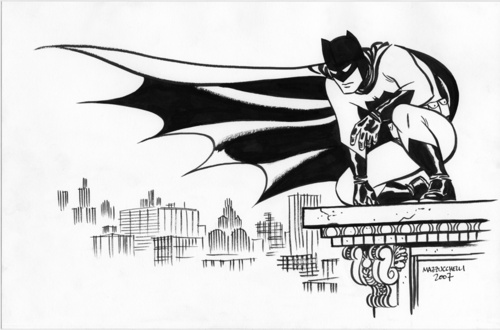
Here I am using this same idea to explore the idea of Batman Year One (Miller, Mazzucchelli, Lewis: 1986-87) as a Fate Accelerated campaign to demonstrate how character progression might work in this system...and maybe poke a bit of fun in process. ;-)

***

Francis has been GM’ing his friend Rich in a single-player play-by-post game called ‘Gotham Nights’ set in Francis’ home-brew setting, the corrupt and decadent Gotham City. 
Dave has been following the posts fervently, enjoying the adventures of Rich’s character Lt. James ‘Jimmy’ Gordon as he tries to do right in a city complicit in corruption, where even the cops are on the take at the highest levels. 
So Dave approaches Francis about the idea of playing a single player game in the same setting; maybe even crossing paths with Dave’s character on occasion as well. 
Francis gets started with some suggestions: 
“Maybe you could play a union boss, trying to protect his boys as they skim shipments coming into port...” 
“Ah....not my style”, counters Dave. “How about I play..umm...some super rich guy who wants to clean up the city with his money and influence?
“Hmmm..”, Francis ruminates. “Gotham runs on violence and intimidation. I don’t see that working well.”
“Ok!”, says Dave, unphased. “Then I will play a rich guy who fights crime on the streets! An eye for an eye!”
Francis: “...you know this supposed to be kind of gritty, right? Why is he fighting crime anyhow rather than like, just giving money to charity and things?”
“Because..a mugger killed his parents when he was a kid! He’s left, and vowed to return to the city when ready to clean up the town so that can’t happen again.”
Francis still has his reservations, but is rather intrigued by the idea of an overprivileged vigilante on the streets of Gotham.
If Dave’s character is going to be fighting crime hands on he will need an aspect granting permission to do so, and he convinces Dave to word his aspect ‘Trained by kickass kung-fu guys’ with the more on-brand ‘I’ve trained a lifetime for this’.

Dave is ready to make his character, Bruce Wayne:

Bruce Wayne
  • Aspects
High Concept: Billionaire playboy by day, crime-fighter by night
Trouble: I lost my childhood in Crime Alley
Other Aspects: I’ve trained a lifetime for this
  • Approaches
+3 Flashy
+2 Quick, Clever
+1 Sneaky, Careful
+0 Forceful
  • Stunts
- Because I am the Heir to the Wayne Family Fortune, I gain +2 to Flashily Create an Advantage when my wealth and good looks might be of help.
  • Refresh: 3
  • Stress: OOO
Consequences:
  • Mild (2):
  • Moderate (4):
  • Severe (6):
  • Extras
Mansion on the edge of the city, Hot sports car

***
  • 1st Session - March 11
Dave’s first session as Bruce Wayne: Crime-fighter does not go as planned.
Bruce goes into the red-light district and challenges a small-time pimp, resulting in being taken out and put into a police car as a concession (after an exchange with a named NPC ‘Selina’).

Bruce manages to escape back to his mansion by taking out the two cops. In a bizarre flourish, Francis has a bat crash through the window of Bruce’s study to confront him with his greatest childhood fear.
Dave creates an aspect for Bruce’s butler ‘Alfred’ to assist with his injuries (addressing his Moderate Complication).

Although his first foray as a ‘crime-fighter’ ended poorly, Dave is strangely enthused at the end of the session, and tells Francis he has some ‘cool ideas’ for the character for the next session coming up.
***

Dave arrives at the next session all fired up. He has passed a Minor Milestone by completing the last session, and has arrived having created two new aspects (one in session, one new, and changed one existing), one new stunt, and has switched his Flashy and Sneaky approaches. He also has a new drawing as well as a new name for his character concept:

The Batman
  • Aspects
High Concept: Billionaire playboy by day, crime-fighter by night
Trouble: I lost my childhood in Crime Alley
Other Aspects: I shall become a bat!; Alfred is always here for me; The best gadgets Waynetech money can buy
  • Approaches
+3 Sneaky
+2 Quick, Clever
+1 Flashy, Careful
+0 Forceful
  • Stunts
- Because Criminals are a Suspicious and Cowardly Lot, I gain +2 to Sneakily Gain an Advantage when dealing with criminal types in darkness.
- Because I am the Heir to the Wayne Family Fortune, I gain +2 to Flashily Create an Advantage when my wealth and good looks might be of help.
  • Refresh: 3
  • Stress: OOO
Consequences:
  • Mild (2):
  • Moderate (4):
  • Severe (6):
  • Extras
Mansion on the edge of the city, Fast black motorcycle

***
As GM, Francis is less-than-sure about this new direction: “Wait....so he dresses up like a bat now?” 
“Yeah!”, responds Dave, enthused. “Remember the whole ‘bat through a window’ thing last session? That’s what he uses to scare the bad guys now- he’s like bat through the window that punches you in the face! Plus, he has like little bat-shaped razors and boomerangs and cool gear, since he has lots of money to buy stuff.” 
“Umm...OK”, says Francis. “So is he always in the bat-suit now?” 
“No, silly!”, Dave replies. “Just when fighting crime. Daytime he’s Bruce Wayne still..when he’s not sleeping or dating supermodels.”
***
  • 2nd Session - April 9 to May 14
The Batman takes out some low-level criminals using his new stunt, and manages to break up drug-deal overlooked by a corrupt named character, Detective Flass.

This is another Minor Milestone, so Dave decides to take a third stunt:

- When I have access to my Utility Belt, I gain +2 to Sneakily Attack opponents in physical conflicts using my gear.

***
Rich: “Wait...so, Dave is playing a vigilante in a bat costume? In MY campaign?” 
Francis: “It’s not YOUR campaign, Rich. It’s mine. And....yeah. It makes sense when he explains it. Honestly, it’s been pretty fun.” 
Rich: “Dave. Synnibarr Dave. He has a dude in a bat-suit, in Gotham: your ‘gritty’ campaign setting.” 
Francis: “He kicked Flass’ ass really good.” 
Rich: “OK...I will admit that part is awesome. But still....not in my town, Francis.”
****

  • 3rd Session - May 19 to June 5 
Dave really has fun here. The Batman manages to scare the wealthy and corrupt patricians of Gotham, as well as ‘take out’ the major crime boss The Roman (since Dave has decided that The Batman ‘doesn’t kill’, he just leaves his enemy tied up and vulnerable).

The GM counts this a Significant Milestone (since he took out a major villain), so Dave raises The Batman’s Sneaky approach by one (+1), he also re-words his ‘Heir’ stunt to be based on a Sneaky Approach. He also gains the favor of Harvey Dent, so he decides to broaden his Alfred aspect a bit to cover new allies:


The Batman
  • Aspects
High Concept: Billionaire playboy by day, crime-fighter by night
Trouble: I lost my childhood in Crime Alley
Other Aspects: I shall become a bat!; My allies are always here for me; The best gadgets Waynetech money can buy
  • Approaches
+4 Sneaky
+2 Quick, Clever
+1 Flashy, Careful
+0 Forceful
  • Stunts
- Because Criminals are a Suspicious and Cowardly Lot, I gain +2 to Sneakily Gain an Advantage when dealing with criminal types in darkness.
- When I have access to my Utility Belt, I gain +2 to Sneakily Attack opponents in physical conflicts using my gear.
- Because I am the Heir to the Wayne Family Fortune, I gain +2 to Sneakily Create an Advantage when my wealth and good looks might be of help.
  • Refresh: 3
  • Stress: OOO
Consequences:
  • Mild (2):
  • Moderate (4):
  • Severe (6):
  • Extras
Mansion on the edge of the city, Fast black motorcycle

***
  • 4th Session - June 6
Francis decides to do a dual session with both Jimmy Gordon and The Batman, complicated by the fact that Jimmy’s player is dedicated to taking out The Batman; only a last-minute compel and the complication of the Gotham Swat Team entering the fray avoids a full PVP conflict.

The Batman uses his Waynetech aspect to avoid disaster. This is counted as another Minor Milestone, so Dave decides to have The Batman reduce refresh by one and take a fourth stunt:

- Because I am the Goddamned Batman, I gain +2 to Cleverly Overcome mooks in a conflict of any kind.
***
  • 5th Session - September 2
James Gordon attempts to confront Bruce Wayne (Batman) on his home turf, in a Challenge; he fails, due to The Batman’s Heir to the Wayne Family Fortune stunt (from before the first session!).

This is a Minor Milestone for The Batman, but he decides to stay where he is... Dave is pretty happy with the character he has built thus far.
***
  • 6th Session - October 2 to October 12
A lot of things happen during this extended session.

The previously established NPC ‘Selina’ becomes the costumed anti hero Catwoman, the villain The Roman is neutralized, and The Batman saves Jim Gordon’s son from certain death, bringing James and his player over to his side.

The GM counts this as a Major Milestone for The Batman, allowing for +1 to any Approach and +1 to Refresh. He is also able to update his High Concept.
***

This brings us the end of Year One, and to a more experienced Batman/Bruce Wayne ready to take on greater challenges:

The Batman
  • Aspects
High Concept: Dark-Knight detective disguised as a billionaire playboy
Trouble: I lost my childhood in Crime Alley
Other Aspects: I’m the goddamned Batman; My allies are always here for me; The best gadgets Waynetech money can buy
  • Approaches
+4 Sneaky
+3 Clever
+2 Quick
+1 Flashy, Careful
+0 Forceful
  • Stunts
- Because Criminals are a Suspicious and Cowardly Lot, I gain +2 to Sneakily Gain an Advantage when dealing with criminal types in darkness.
- When I have access to my Utility Belt, I gain +2 to Sneakily Attack opponents in physical conflicts using my gear.
- Because I am the Goddamned Batman, I gain +2 to Cleverly Overcome mooks in a conflict of any kind.
- Because I am the Heir to the Wayne Family Fortune, I gain +2 to Sneakily Create an Advantage when my wealth and good looks might be of help.
  • Refresh: 3
  • Stress: OOO
Consequences:
  • Mild (2):
  • Moderate (4):
  • Severe (6):
  • Extras
Mansion on the edge of the city & The Batcave; Access to bat-themed vehicles


GM's Water Cooler: In Media Res

I've been thinking a bit of late about using more In Media Res techniques in my game. For those not aware, this is a writing technique that begins the story in-progress, and has been used as least as far back as Homer in the Odyssey. I imagine the technique is older than that, with hunter gatherer tribes 100,000 listening to a story-teller speak of ancestral heroes.

Examples abound, such as the openings of Inception, just about every Bond movie ever, and the pilot of Lost, but the best of them has to be Star Wars. 


The audience sees this huge ship enter from overhead, then sees it being hit by turbolaser fire, then sees an absolute monstrosity of a ship enter from overhead, and go on, and on, and on, and on. Immediately we learn three things about the universe we just entered: 1) Our heroes are the underdogs, and 2) The Empire has an absurd amount of power, represented by the disparity in ship size, and 3) the Empire's victory is unquestioned and inevitable. These elements are core themes for the original Star Wars trilogy, and they are communicated expertly in just a few seconds with no exposition at all.

In each of the scenes linked to above, we are dropped in not knowing how we got there. This is easy to do in the first session of a roleplaying game, and much more difficult later on, when plots develop and the players move from point A in the story to point B. In an established campaign, its hard to use this device the further you go.

This is what I'm wrapping my brain around these days. Lets say we have a scenario in which our pulp PCs have discovered that the Nazis are scrambling to Palenque to steal an occult artifact, and the PCs need to get it first lest the Reich run roughshod over Europe. 

The adventure starts with them arriving by plane in some jungle outpost, where the PCs negotiate with a riverboat captain to take them to the temple. Along the way, they fight off pirates and crocodiles. Departing the boat, they cut through the jungle, fend off poo-flinging monkeys and arrive at the temple. They defuse traps along the way, and get to the inner sanctum where the MacGuffin lies, and figure out how to get it without being killed. A melodic German voice from behind them congratulates them on getting this far, and they turn to see a dozen SS soldiers with machine guns pointing at them.


If we use media res, we could skip the parts leading up to the Nazis introduction, and simply assume that our talented and resourceful treasure hunters succeed to that point. If the story says 'the part I want to explore is the Nazi/pc stuff', this might be a better approach. That being said, I can see a few problems the players may raise; the dreaded specter of rialroading being foremost among them.

Pros:

  • Skip right to the good stuff
  • Move the plot along quickly
  • Reinforce the PCs' aptitude


Cons:

  • PCs lose out on extra XP/storytelling/other rewards
  • The players lose authorship
  • Missed chance at establishing organic plot details (interaction with the pilot/boat captain, etc)

Ideally, either approach works, and which to use is dependent upon the story you want to tell, and whether your players are on board with advancing the story without their input. Another approach would to start the session saying "You've got the idol. What happened leading up to this point?" The GM and the system being used would have to be able to support the introduction of on-the-fly elements in this case, but it does circumnavigate some of the loss of authorship. The GM could, at that point, even have them make a few skill checks to see how well they did at navigating those player-proposed obstacles, and introduce elements that reflect their success or failure.

What stories of success or failure do you have when using this technique?


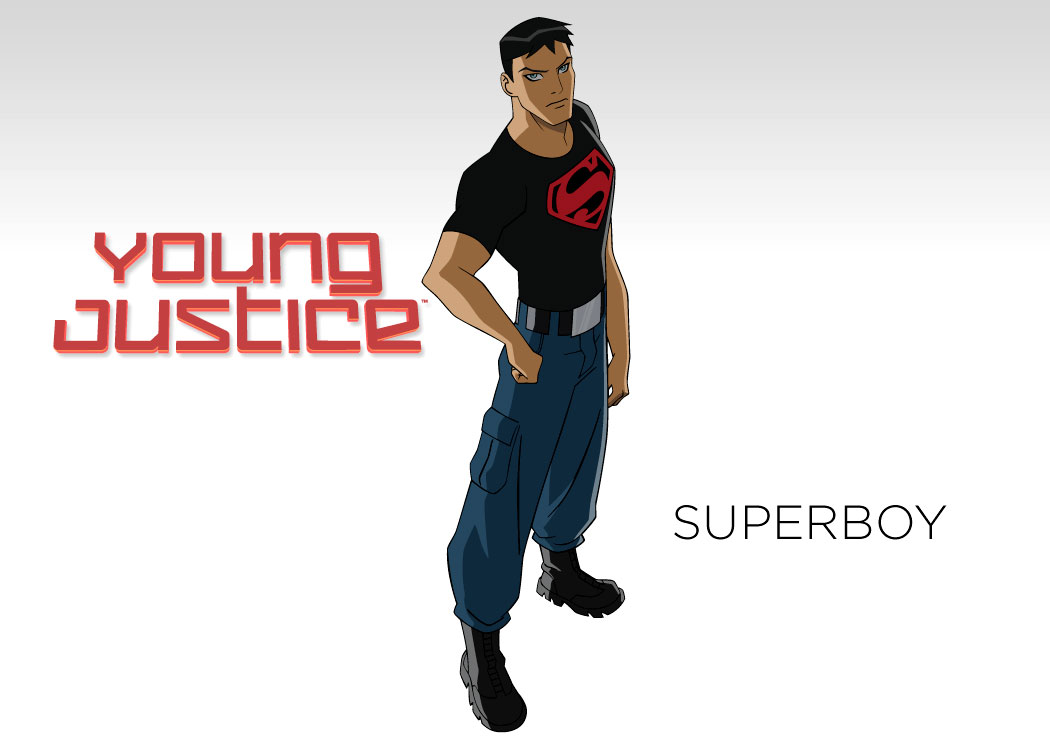
Young Justice Character Highlight: Superboy (FAE)

Working on my Young Justice builds, I finally got around to Superboy!

My apologies for the delay, fangirls.;-)

He wears a black t-shirt and paratrooper pants, and likely listens to Korn. Your sister thinks he's 'kind of hot'.

But hey- Superman family, right? Can't hate too much. Enjoy:


Superboy (Des. B04)
  • Aspects
High Concept: Emo Cadmus-created Kryptonian -human hybrid
Trouble: Anger-management issues
Other: Almost as good as the real thing
  • Approaches
+3 Forceful
+2 Quick, Flashy
+1 Clever, Careful
+0 Sneaky
  • Stunts
- Because I am Almost as Powerful As Superman, I gain +2 to Forcefully Attack or Overcome when my super-strength can be a significant factor.
  • Refresh: 3
  • Stress: OOO
Consequences:
  • Mild (2):
  • Moderate (4):
  • Severe (6):

  • Extras
Zeta-tube access: Designation B-04; Mount Justice HQ access

  • Vital statistics
Real name: Conner Kent
Alias: The Weapon; Project Kr
Age: 16 weeks (16 years physiologically)
Species: Kryptonian-Human hybrid genomorph

  • Power Facts
  • Super strength: allowing him to easily pick up or carry heavy objects.
  • Super leap: To compensate for his inability to fly like Superman, Superboy uses the super-strong muscles in his legs to jump incredible distances and heights.
  • Invulnerability: Like Superman, Superboy is nearly indestructible. He has yet to be permanently injured, but he does experience pain.
  • Super hearing: Superboy can pick up the faintest of sounds over long distances.
  • Infrared vision: This ability allows Superboy to visually detect heat signatures, allowing him to easily see in the dark.

  • Background/Personality:
Although he desires to be a good hero, Superboy has anger issues. Having spent his first 16 weeks of existence as a science project and mind-controlled puppet, Superboy is defiant and does not like being told what to do or being dismissed.

He often behaves with an air of extreme confidence, due in large part to the fact that he is Superman's genetic clone, and was created in order to replace him. This makes him exceedingly overconfident in his abilities to the point that he ignores the help of others and impulsively throws himself into situations that he cannot handle on his own.

Superboy is somewhat anti-social and has a hard time getting along with others or showing his emotions. As such he constantly behaves in a confrontational manner to all people, even those who are attempting to be kind towards him. Even simple things like making amends with people who he has wronged is a tough concept for him to understand.
Superboy can understand and speak many languages outside of English. He is at least fluent in Spanish, Atlantean, French, Korean, Arabic and Russian, among other languages. Likely due to the G-Gnomes, Superboy has an encyclopedic knowledge of World History.

****

Tuesday, October 1, 2013

[Actual Play Report] Star Wars - Scum and Villainy, Session 5

Previously, on Nar Shadda, our heroes got caught between two rival gangs at a local nightclub where a birthday party for a notable member of one gang was happening. When the kitchen staff (all Rodians, who in my game are space-Mexicans) came out to serve the meal, all hell broke loose. The Rodians removed the tops of their serving platters to unveil guns, and started shooting everyone up. The PCs managed to set off a huge explosion, bringing down the roof, and barely made it out alive, and one of them did not.

After escaping Nar Shadda, Desca managed to purge the records of their bounty from the records of a few smaller planetary records, while Van Draal called in a favor to get the Black Pariah repaired and retrofitted with the ship weaponry they acquired on Acherin.

Over the next two months they managed a few low-paying jobs, one of which was delivering a shipment of spice to fence affiliated with Bib Fortuna. After they dropped off the spice on Akranis, they were pursued by, and escaped, from the feared Bounty Hunter Bossk.

Star Wars 

Episode 4
Scuttle Me Scuppers

Crawl:

Two months after the incident on NAR SHADDA, the crew of the BLACK PARIAH have struggled to make ends meet. With a price on their heads, jobs have been hard to come by, and BOUNTY HUNTERS are never far behind. 

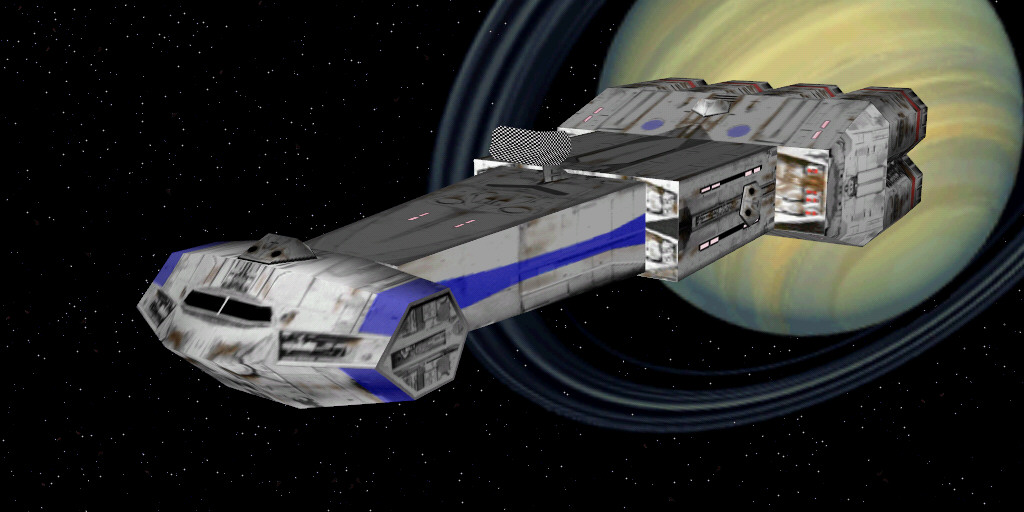
A pirate fleet from the ZANN CONSORTIUM lies in orbit around the gas giant PUJOOL in the ANOAT SECTOR for refitting and repair. You docked with the Corellian Corvette GILDED HARBINGER this morning to purchase an astromech droid from a Neimoidian pirate named LANA KEEG. Thus far, it has been a rather boring day…

Breakfast on a pirate ship in hiding - what could go wrong?

SCENE 1 - Surprise Attack!

The pirate fleet consists of four smaller capital ships and supporting vehicles. The Gilded Harbinger has certainly seen its share of combat, but looks sturdy enough. Its decks and corridors are utilitarian, and the primary contingent of the ship are old Banking Clan battle droids left over from the clone wars. The officers are mostly a mix of Duros and Neimoidians, with a few other races sprinkled about. You've spent the morning in an officer’s meeting room with Lana Keeg, eating a spartan meal and listening to her drone on about Duros opera. The hallucinogenic oranges, reds and purples of Pujool’s vast bulk occupy all of the lone window in the room.

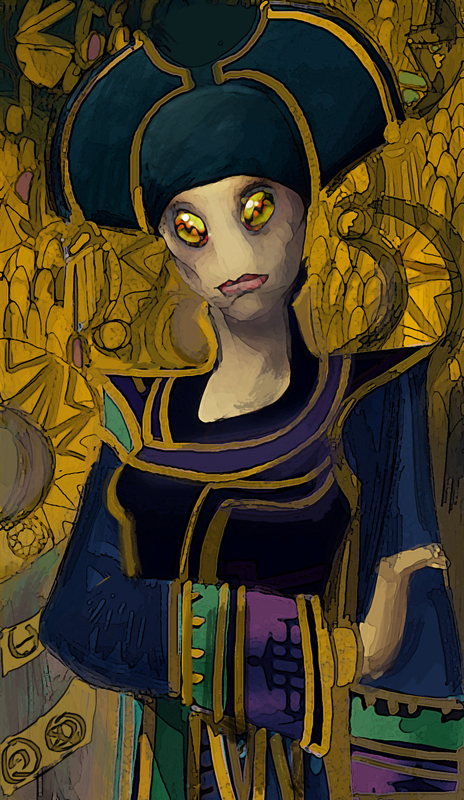
Lana Keeg (played by Helen Mirren) receives the credits from the crew, and signs the droid over to Desca. The droid, which she calls ‘Red’, is an R5 series astromech droid with a faulty motivator. They've tried fixing it numerous times, but they can’t seem to resolve the issue. Furthermore, the droid has a rather abrasive personality, and constantly feuds with the other droids on board the ship. Given the fact that a large percentage of the ship’s crew are Battle Droids, this has caused endless issues. Even repeatedly wiping the droid's memory hasn't made any difference, and now she just wants to be rid of the thing.

As they talk, Wulf puts his dirty boots up on an expensive ottoman, drawing the ire of Lana, a perfectionist. When Wulf makes a crack about the droid being equally filthy, Red replies with a vociferous stream of obscenities. Wulf and the droid nearly come to blows before Van Draal and Desca alleviate the situation.

The four criminals talk about possibly using this meeting to set up future collaboration. The Zann Consortium pirate fleet is currently striking at the Empire whenever they can. They are a remnant of the Confederacy of Independent Systems, and are building their resources awaiting a return by their leader, Count Dooku, who is rumored to still be at large.The PCs can help by acquiring much of these resources for them, and they begin to flesh out how to make this alliance happen.

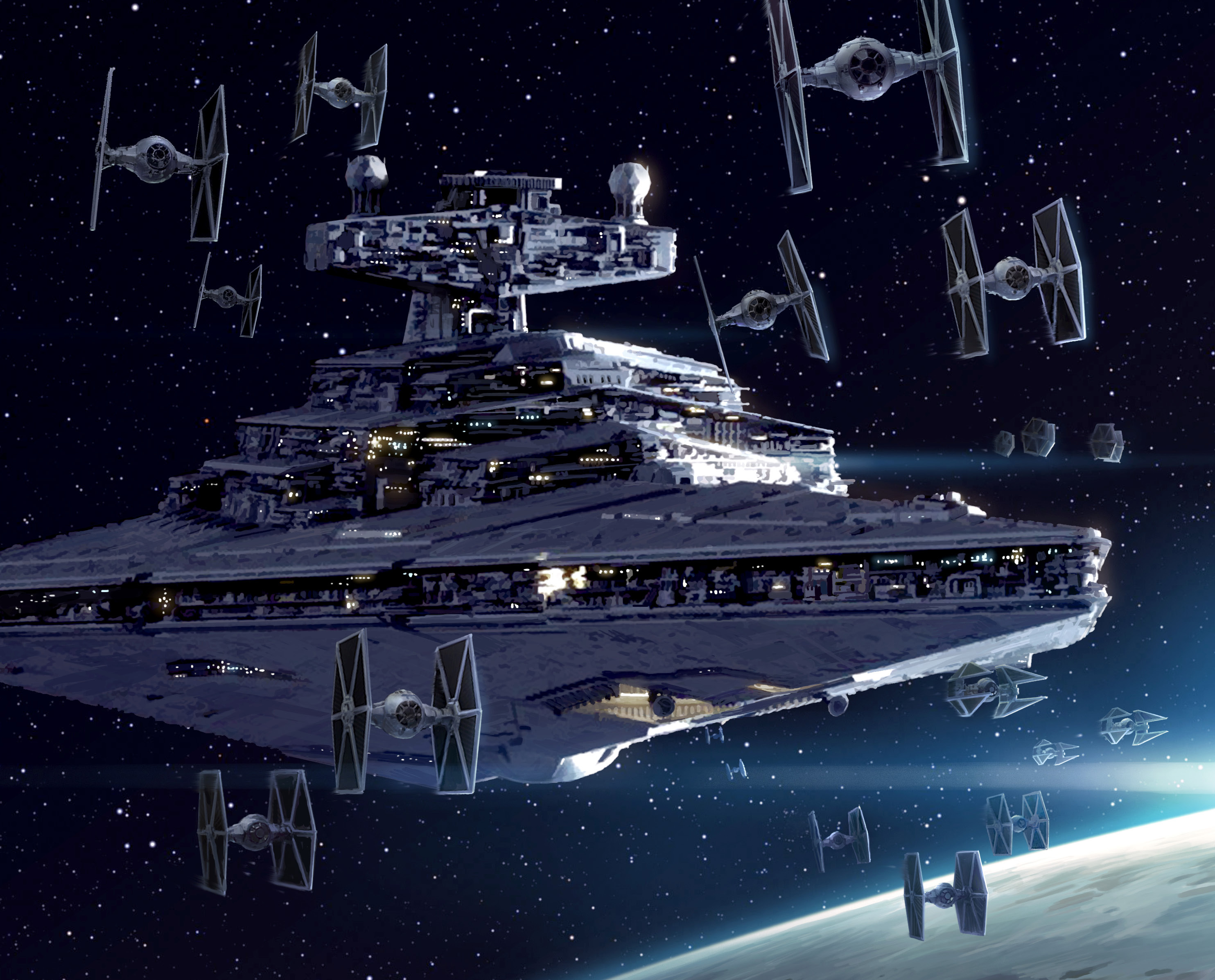
Suddenly, the corvette reels from what feels and sounds like a huge explosion! Klaxons roar, and red warning lights flood the room. As you get back on your feet, Keeg leaps to a computer terminal. “This is not how I wanted to spend the rest of my day,” she remarks, as her fingers dance across the control panel. “Lovely. ISD Exactor. 501st. You should make yourself scarce - this is going to get ugly.” Another blast shocks the hull, causing the lights to flicker. Across the hallway you can see laser-fire batteries arcing towards the ship.


Good morning! I hear you are serving breakfast! We'd like a table for 47,060 please.
Red immediately wheels towards the corridor. The harsh whistles and groans he lets out are easily recognized as profanity, even if you don’t understand Binary.

As the ship rocks from the turbolaser barrage, the PCs quickly decide to follow Red’s lead and make for the turbolift. They need to navigate down four more decks to get to the Black Pariah and escape.

SCENE 2 - Escape To The Hangar Bay

As the turbolift goes down, another direct hit causes systems to go haywire aboard the Corvette. The turbolift grinds to a halt as it nears the next level down, and the lights begin to flicker on and off intermittently. The doors half open, and the crew clamber out onto the Engineering Deck.

This dimly-lit corridor is flanked by tanks holding the ship’s tibanna gas fuel. Red pulls up a ship schematic, and directs the party to a service ladder at the far end of the deck. They make their way down the corridor, and another hit rocks the ship. A routing tube breaks loose and sprays Van Draal with supercooled toxic coolant. Luckily, he took the brunt of it and none of his companions were harmed. As the coolant begins to fill the corridor, they make haste to the safety of the ladder.

The PCs hastily scramble down the ladder to the Bridge Deck below. Desca falls, but Wulf’s bulk softens her landing. Moving from stern to bow, the crew hears screams and smells the odor of an electrical fire ahead. Stopping at in a maintenance room, Red unsuccessfully tries to active the floor’s fire suppression system. Van Draal takes a moment to fully don a fire suit, while Wulf and Desca put on masks. Rummaging through the remainder of the gear in the room, Wulf snags his oxygen tank on a shelf, discharging its contents and rendering it inoperable. Desca locates a liquid cable launcher and stashes it away.

The corridor leading to the bridge itself is filled with smoke; as the players approach, four short-circuited battle droids, rifles raised, step out of the burning hallway and open up. Wulf bounds towards them, destroying three and severely damaging another. The damaged droid's power battery is exposed to Desca’s next shot, and resulting explosion sends droid parts everywhere.

The bridge is a mess. The turbolift is sealed shut, and two beleaguered crewmen busy themselves trying to deal with the growing fire emanating from the wall. Wulf and Van Draal, wearing the proper gear, aim their fire extinguishers to help. Desca directs Red to a computer port near the entrance to the turbolift. Red tries in vain again to activate the deck’s fire suppression system, but in the process, he confirms that the aft turbolift is indeed operational.

Abandoning the plan to put out the fire, Wulf uses his vibroaxe to pry the doors open. He’s successful, but his vibroaxe suffers a fractured head. The remainder of the team pile into the elevator. One of the two crewmen continues to fight the fire, but the other follows along: “You guys have a ship right? Lets get out of here!”

SCENE 3 - The Deck of Death

Desca presses the button for the lowest level, marked TURBOLASERS, HANGAR and the turbolift goes down, interior lights flickering. A red light opens flashes, indicating a stop request on the next level down: DROID CONTROL. The turbolift slows and stops. The PCs are lifted off their feet as the artificial gravity on this deck is no longer functional.

The aft turbolift doors open onto what can only be described as Hell. At the other end of the long passageway that runs the length of the deck, a black wall of smoke slowly advanced. The only thing emerging from that fiery blaze were the cries of the dying. In front of the wall, desperately swimming aft in zero-g, desperate crew members focused their panicked eyes on their only escape - the turbolift now on their floor.

As the party floated to the top, Red - his feet magnetically clamped to the floor - calmly pushed the button to close the door.

SCENE 4 - The Shaft

You begin to hear a roar, growing stronger by the second, coming from every direction. The ship begins to vibrate, then shake, sometimes violently. You begin to realize that the artificial gravity on the ship is failing, and a new gravitational force is being applied to the ship. The aft section seems to be rotating to point to that new source of gravity. Suddenly, as the turbolift changes its axis, you realize something terrible - the ship is beginning to plummet into Pujool’s atmosphere!

"Well, lets look on the bright side. At least we'll die with a full belly."
As the ship groaned and shuddered, the doors opened. The lowest deck on the ship loomed above them, now a tall shaft. Debris tumbled into the turbolift, and the entire area was only faintly illuminated by the dim red emergency lights.

Desca was thrilled - the synth-rope launcher she acquired previously was now the perfect tool! After a few attempts to fire it securely to a high spot on the shaft above, Van Draal took it from her and planted the magnetic end securely. The two of them zipped up. Red, by virtue of his magnetic feet, climbed the wall effortlessly. Wulf grabbed onto the henchman - confused as to why they kept calling him “24” - and began to climb.

The going was tedious for Wulf - not made any easier by the fact that he was carrying someone and his companions were making their way, bit by bit, up the shaft. The hull was beginning to be torn apart by atmospheric re-entry, and they had very little time to get out on their ship before the whole thing was torn and burned to pieces. Upon securing himself to one of the walls, Van Draal noticed that the turbolift far below had gone back up again. It would not be long before they had company.

Doubling their efforts, the party continued to climb. The red light on the turbolift blinked shortly thereafter, and the doors opened to reveal a ragged band of weary pirates. “They have a ship” one exclaimed, pointing at the party, “lets get ‘em!”

Blaster fire bounced off the walls of the shaft. Luckily, the pirates were a terrible shot in this dim lighting. Van Draal secured himself in a doorway and squeezed off a shot; in the process, he lost his footing and nearly tumbled to his death. While he was lucky, his heavy blaster pistol was not, and it tumbled down, down, down into the open doors of the turbolift. Irritated, Wulf resorted to his standard problem-resolution technique, and dropped a grenade. the pirates looked on in horror as the grenade made the long fall to them, and scrambled to close the turbolift doors. No matter how many times they pushed the button, the doors were too slow in closing. When they finally did, the grenade was at their feet. The resulting explosion made short work of both the pirates and the turbolift as well.

The party resumed their long climb up towards the stern of the corvette. Desca and Van Drall zigzagged their way up with the synth-rope launcher, 15m at a time. Wulf spotted a computer terminal that had wrenched from the wall and was now dangling by a bundle of power cables. Slinging 24 onto his back, he used it to climb. His and 24’s eyes widened in terror as, halfway up, the cables started popping loose, one by one. The whole thing gave way, and Wulf managed to latch onto a doorway. Unfortunately, the sudden stop was too much for the opportunistic henchman, who tore loose and fell. He screamed as he plummeted, and ended his life in a sickening crunch at the bottom.

Eventually the crew made it up the majority of the shaft, into what used to be the Medical Bay. Exhausted, they took a moment to catch their breath before continuing up to the blast doors above and into the hangar. Suddenly some exterior structure tore loose from the ship with a horrific ripping sound,resulting in a small breach of the hull. Pujool’s toxic atmosphere came flooding into the lower-pressure interior, accompanied by fire. They scrambled up the computer stations and walls in a rush to make it through the blast doors. All, that is, save for Red. Ignoring the furnace the room was quickly becoming, the droid rolled over to the breach. Debris flew about him, and his claw appendage snagged a large sheet of metal from the air. He slammed it over the hole and, shortly thereafter, sealed a weld to end the threat. Meanwhile, Van Draal hacked into the blast door controls and got it to open.

SCENE 5 - The Hangar

Once you manage to get the door open and push aside all the debris that has fallen onto the brand new floor, you let out a sigh of relief, as your ship is still attached to what is now a wall by docking clamps. Under normal conditions, the floor opens beneath the ship and it drops out; now that floor is a wall. You aren't quite sure how this will work. As you speculate, you can hear parts of the ship being ripped away as you plummet deeper into the thick alien atmosphere of the gas giant. You then notice verbiage all over the place stating “WARNING - DEPRESSURIZATION ZONE.”

The hangar was unbearably hot. The lights were out, save for the faint red emergency lights, which meant that the room did not have full power. Far above them on the new ceiling, the PCs spotted a computer terminal labeled MANUAL DOOR CONTROL. Desca suddenly realized, to her horror, that this meant they would not be able to wirelessly link into the hangar bay controls and remotely retract the docking clamps as well as open the hangar doors from the safety of the ship.

Thinking quickly, the PCs came up with a plan. Desca securely attached the synth-rope to Red while Van Draal climbed into the cockpit. They opened the Black Pariah’s cargo bay doors and activated the ship’s magnetic field. Wulf wrapped himself in whatever he could find attached to the back wall of the cargo bay and held on to the other end of the synth-rope. Desca joined Van Draal while Red wheeled up the wall to the manual terminal.

Red released the docking clamps and Van Draal powered the ship up. Engines ready, Red manually opened the hangar doors. Immediately the room exploded in blinding 1000 degree fire as Pujool’s atmosphere forced its way into the hangar. Wulf could barely hold on as Van Draal plowed the Black Pariah out of the plummeting capital ship. Seared and nearing his melting point, Red retracted the synth-rope and got to the safety of the magnetically sealed cargo bay. Moments thereafter, the synth-rope dissolved from the heat.

SCENE 6 - Out Of The Frying Pan And Into The Fire

Finally free of the burning ship, the crew of the Black Pariah watched it break apart and dissolve in flames. Van Draal could barely keep control of the small freighter a midst the 300 km/h winds of the planet. Thinking quickly, he realized that the ionized atmosphere would shield the little ship from the sensors of the tie-fighters behind them, and, at a minimum, make it difficult for the Exactor to spot them. He throttled the engines and dove deeper into the blinding violent could, and set a course for a super-massive storm just ahead. Entering the maelstrom, all hands worked desperately to keep the ship in one piece as it was swatted around by the fierce winds of the storm. After what seemed like an eternity they neared the other side of the storm, but just as they were set to be free of it, the ship was hit with lightning, completely melting its shield generator. The Pariah limped out of Pujool’s atmosphere on the other side of the planet battered but not broken. Fearing detection by the Star Destroyer, Desca rapidly plotted a course for the first system she could think of, and the freighter leaped into hyperspace, bound for the Tatoo System.